

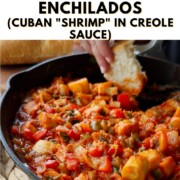
This vegan camarones enchilados is all the sauce you remember, none of the shrimp. Golden-seared hearts of palm in a slow-simmered sofrito that goes deep red and thick, the kind you tear off a piece of Cuban bread to chase around the plate. Perfect for a weeknight when you want something that tastes like it took all day but only dirties one pan. And it's ready in under an hour.
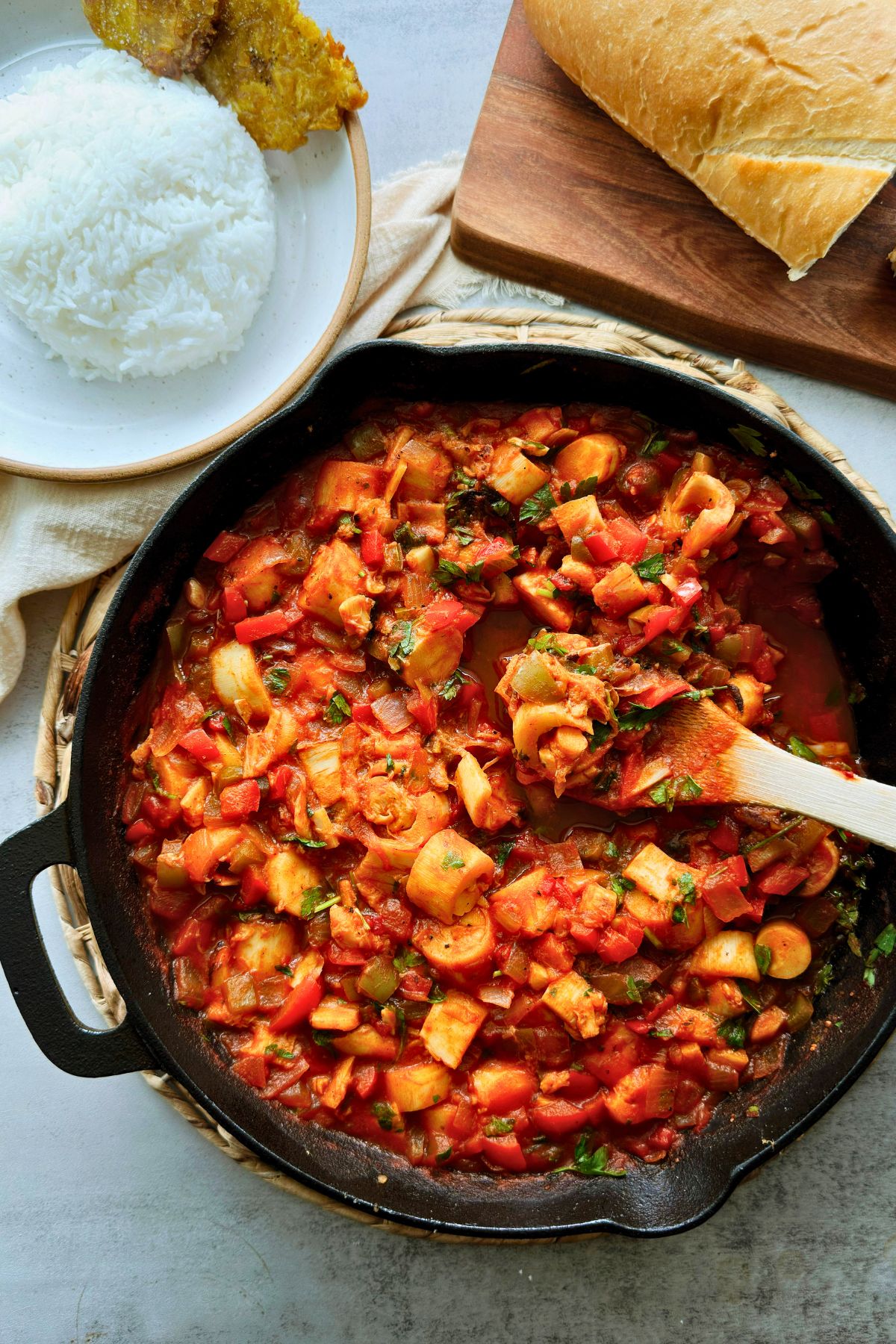
Cuban cooks have been spooning enchilado sauce over white rice for generations.
Enchilado refers to a family of Cuban dishes-pescado (fish), langosta (lobster), and camarones (shrimp). And while the protein changes, the sauce is what ties them together.
My mom made camarones enchilados all the time, and I was never really in it for the shrimp. I was in it for the sauce. I'd tear off a piece of Cuban bread and drag it through whatever was pooled on the plate until there was nothing left to soak up.
After making this a dozen different ways - Old Bay, dulse flakes, a strip of kombu in the soaking water - I realized the shrimp was never the point. The sauce was. Golden-seared hearts of palm carry it just as well.
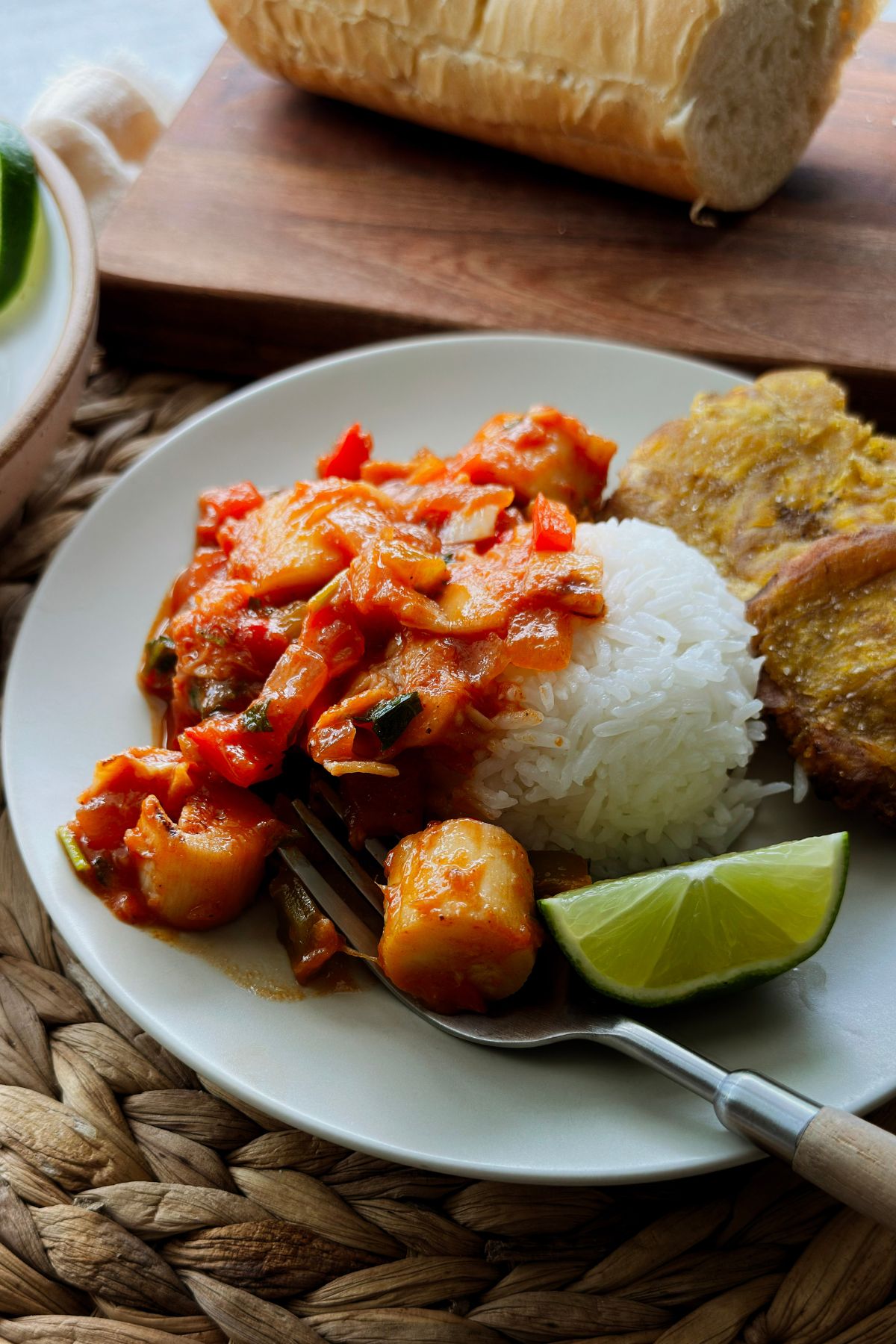
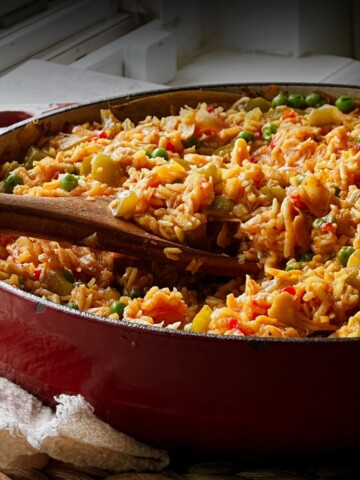
Serve it with white rice, tostones, and plenty of Cuban bread for soaking up the sauce. Along with Vegan Arroz con Pollo, it's one of my favorite meals.
Jump to:
What Are Camarones Enchilados?
Camarones enchilados is a classic Cuban dish of shrimp simmered in a rich tomato sauce built on sofrito - onion, garlic, and bell pepper gently sautéed together until soft and sweet. Think of sofrito as Cuba's version of the holy trinity.
That same base starts an enormous share of Cuban cooking, including my vegan Cuban fricasé, which finishes in a sauce so close to this one that you'll recognize it on the first bite.
Despite the similar name, Cuban enchilado is quite different from a Mexican enchilada. Rather than a filled tortilla covered in chile sauce, enchilado refers to the flavorful tomato-based sauce in which the shrimp are cooked.
Why This One's on Repeat
- One pan: The seared hearts of palm and the sauce are made in the same skillet, so it is weeknight-friendly.
- Genuinely tastes Cuban: No shortcuts on the sauce that is traditionally vegan. There is no ketchup-and-hot-sauce fakery here, as I see in many recipes.
- Tastes great the next day: The sauce deepens overnight, which makes it a great make-ahead for company.
- Pantry-friendly: Aside from the produce, everything comes from a can, a jar, or your spice drawer.
- Great for many diets: Naturally gluten-free, and vegans, vegetarians, and omnivores all love it.
Shopping List
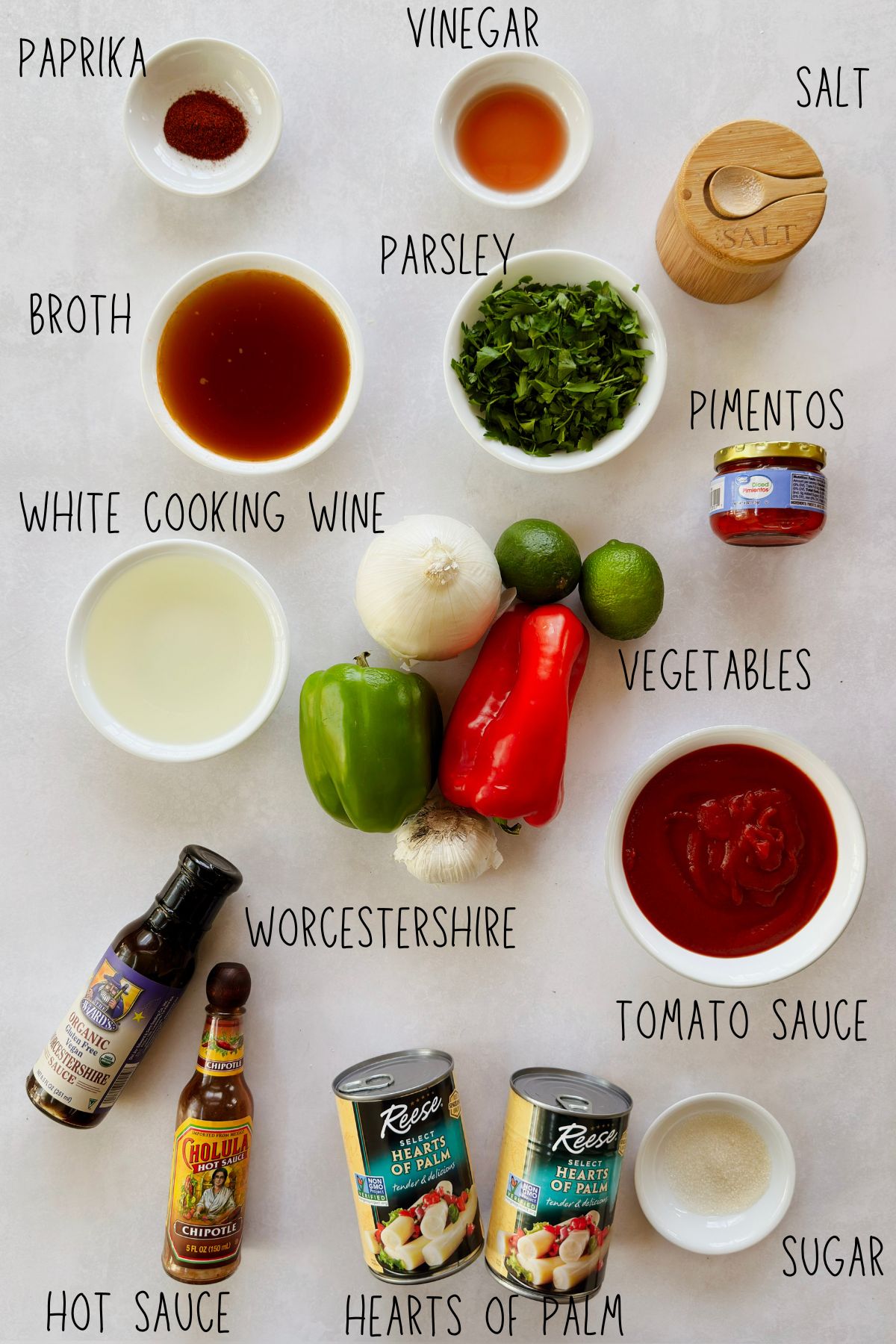
Hearts of palm: These are naturally flaky and a little briny. They are really good as a plant-based seafood substitute. You can also use king oyster mushrooms. If you're looking for shrimp alternatives, check out this post from VegNews.
A note on sourcing: Hearts of palm from wild single-stemmed palms kill the tree (that's how Brazil's juçara palm ended up endangered). Look for cans labeled peach palm (Bactris gasipaes), usually (not always) from Costa Rica or Ecuador. It grows in clusters and regrows after cutting, so it's harvested without taking the plant down. This supports a more sustainable way of harvesting hearts of palm, helping to protect wild palm populations and the vital forest habitat they provide for wildlife.
Kombu or nori: A 4-inch strip of kombu (or one torn nori sheet) steeped in warm water gives hearts of palm a clean oceanic note that reads as seafood without tasting like a sushi roll. It's the same trick I use in my Vegan Chickpea Tuna Salad. Skip it, and the dish is still great - just no ocean smell or taste you might expect.
Dry white cooking wine: Cuban cooks reach for vino seco, a salted dry white cooking wine sold in the Latin aisle. It's what gives the sauce its background tang. A dry white drinking wine works too.
Vegan Worcestershire Sauce: Traditional Worcestershire sauce contains anchovies, so it is not naturally vegan. Look for this vegan Worcestershire sauce to keep this recipe fully plant-based and gluten-free. If you can't find one, you can leave it out.
Hot sauce or red pepper flakes: Cuban food isn't fiery, so this is warmth rather than heat. Start small.
Paprika: I use this Spanish sweet paprika, which has a mild, slightly sweet flavor without overpowering the sauce.
Sugar: The sugar is not to sweeten the sauce. It rounds off the sharp edge of canned tomato. You won't taste it as sugar. I reach for organic cane sugar, which skips the bone char filtering that some conventional sugar goes through.
See the printable recipe card for quantities and a full list of ingredients.
Ways To Change It Up
- Instead of hearts of palm, use super-firm tofu. Press it, tear it into rough bite-size pieces, and soak it with the kombu as in Step 1. It drinks up the flavor well. You may even want to use defrosted tofu to get a slightly different texture.
- Cauliflower florets, roasted at 425°F first, then folded into the sauce at the end, make another great plant-based option.
- Butter beans or chickpeas make a hearty, budget version.
- King oyster and hearts of palm together give you two different textures in one bowl.
- Add sliced green olives and a spoon of capers for a Spanish-leaning version.
How to Make Vegan Camarones Enchilados
See the complete printable recipe card below for the details.
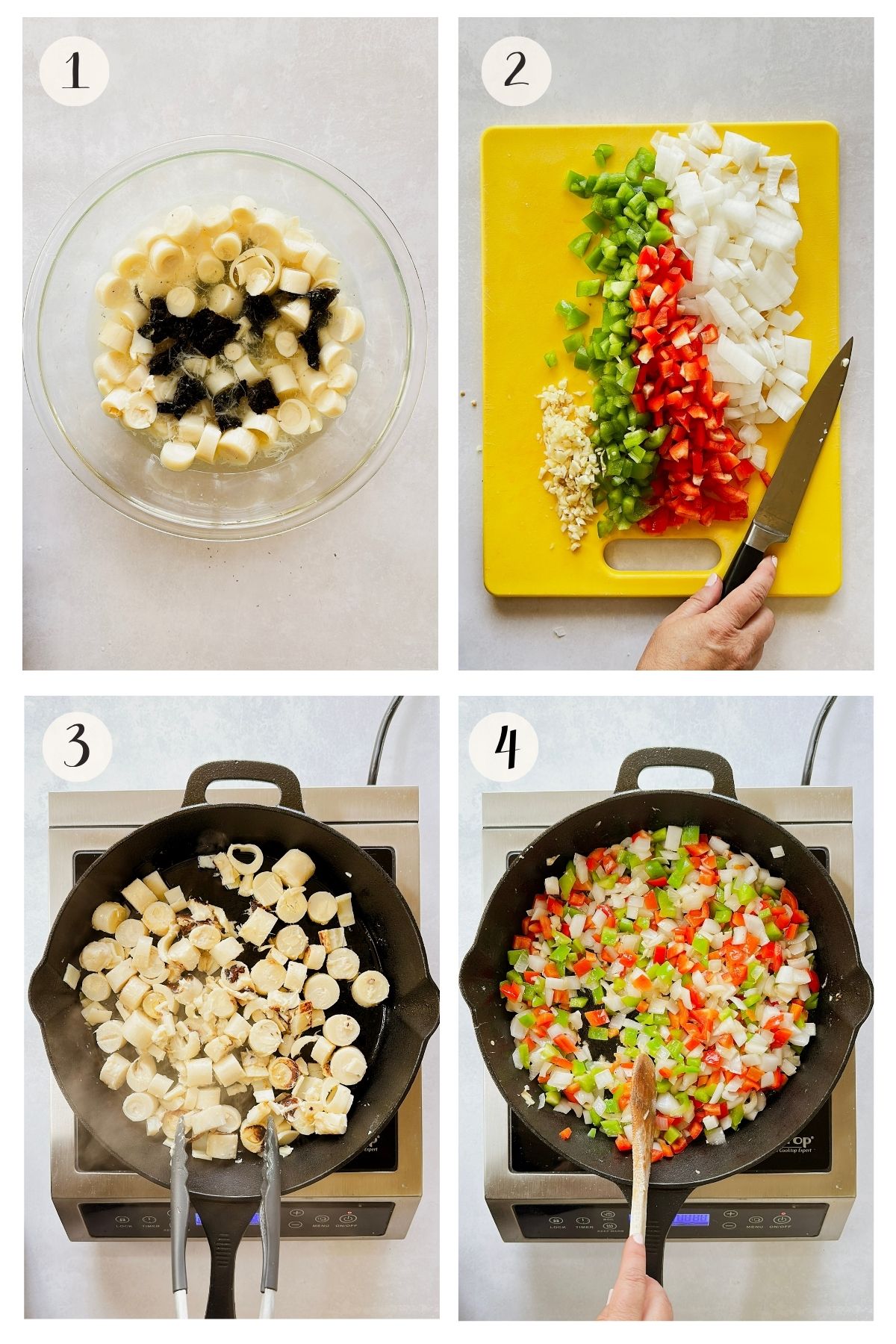
Step 1. Slice the hearts of palm into rounds and soak them in salted water with kombu or torn nori for about 15 minutes to pick up a seafood-like flavor.
Step 2. While they soak, dice the onion and both bell peppers, and mince the garlic.
Step 3. Drain and pat the hearts of palm dry, then sear them in a hot cast-iron skillet until they take on a golden color. Remove and set aside.
Step 4. In the same pan, sauté the onion, peppers, and garlic until softened.
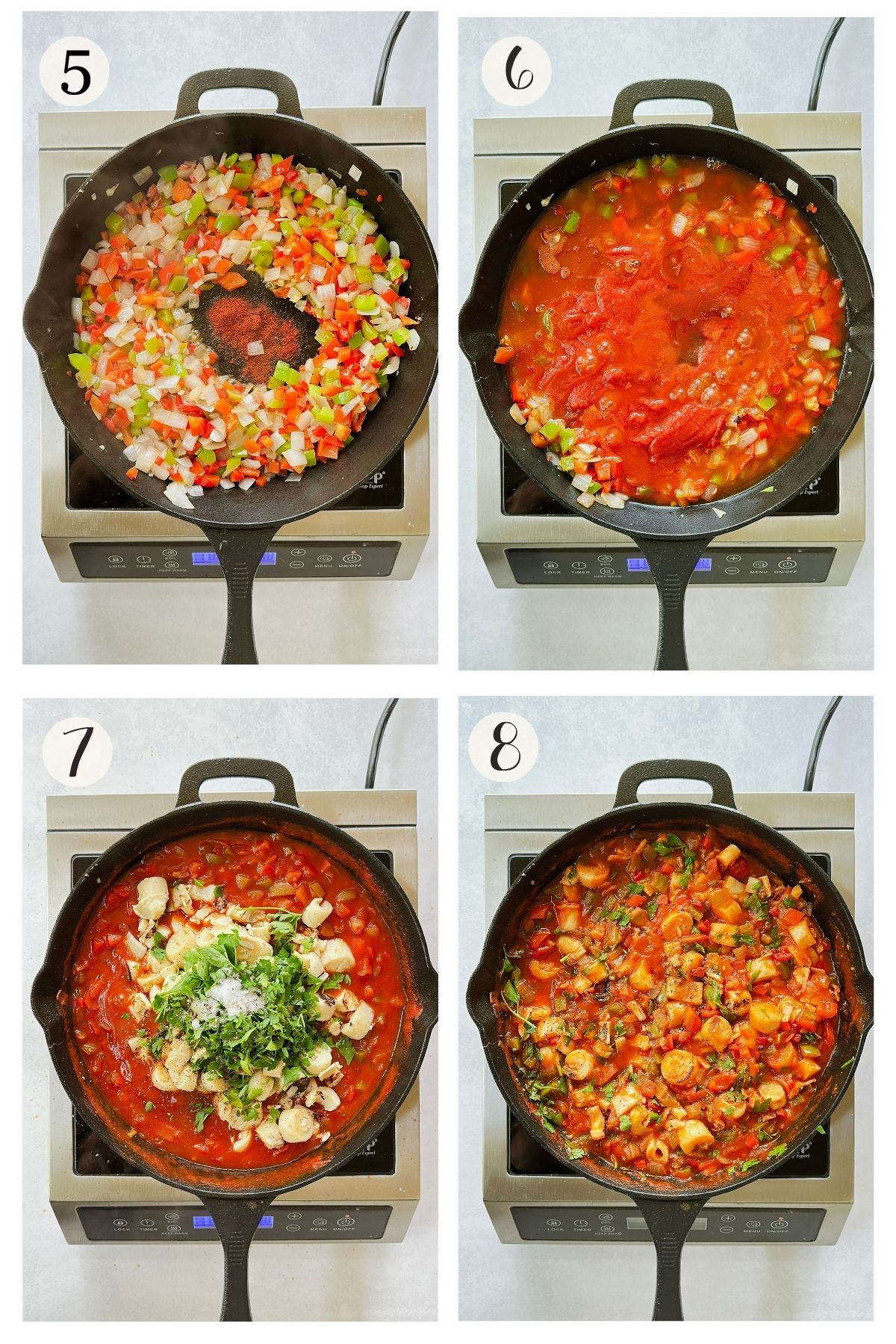
Step 5. Add pimentos. Then, push the vegetables aside, add the paprika to the center of the pan, and let it bloom for about thirty seconds before stirring it through.
Step 6. Pour in the tomato sauce along with the broth, white cooking wine, vinegar, Worcestershire, hot sauce, and sugar. Bring it to a simmer and let the sauce cook down.
Step 7. Return the hearts of palm to the skillet and add the parsley, salt, and cracked black pepper.
Step 8. Stir to coat and simmer a few more minutes until the sauce thickens and clings. Finish with a squeeze of lime, if desired.
Regi's Tips
- Dry is everything when browning the hearts of palm. Dry them just before searing.
- Don't crowd the pan. Sear the hearts of palm in two batches if needed. Crowding drops the temperature, and everything steams.
- Cook the sofrito (veggies) low and slow. Underdone sofrito tastes sharp and raw, and no amount of simmering later fixes it.
Serving Suggestions
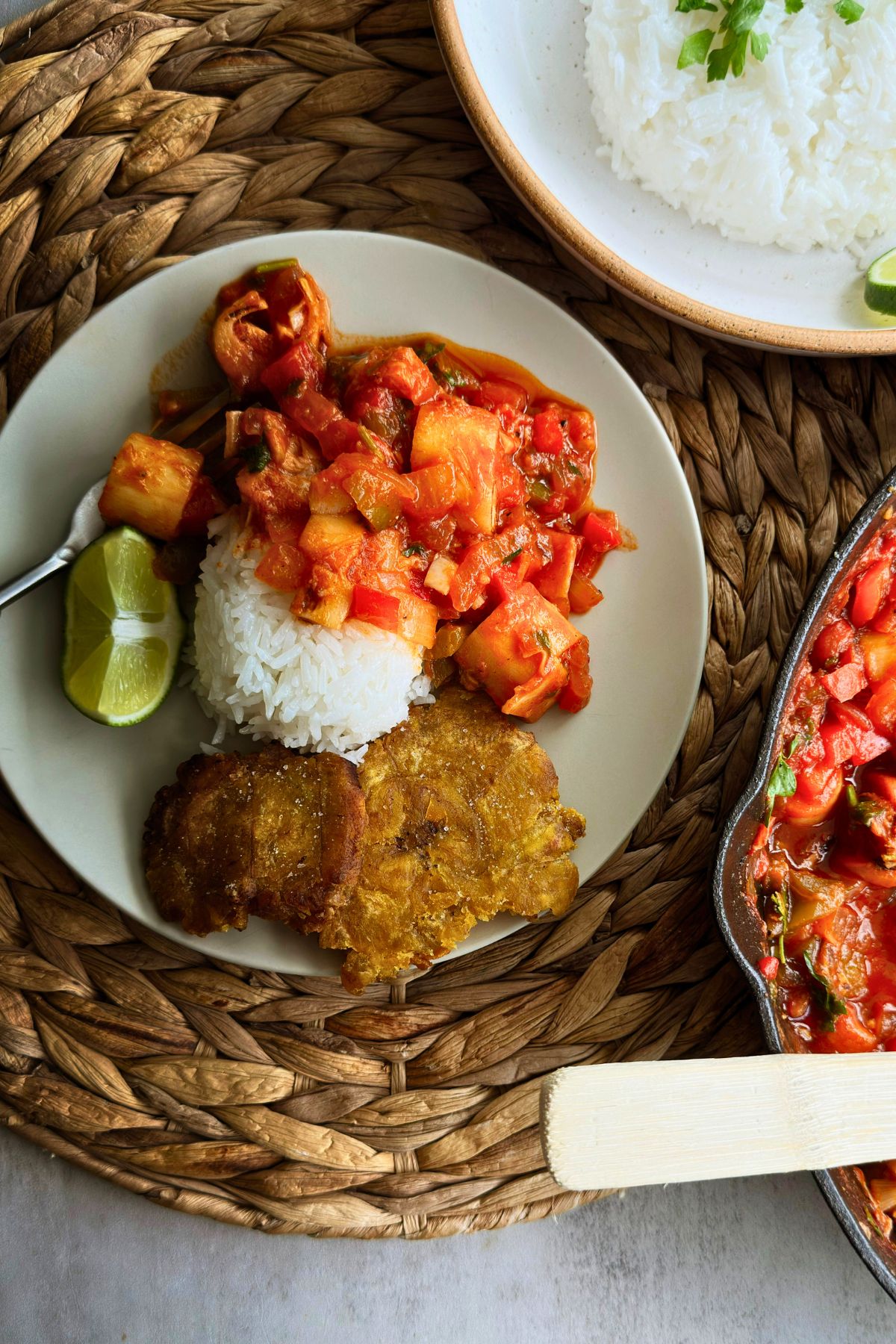
- White rice is classic when eating these vegan camarones enchilados. Fluffy long-grain, and plenty of it, so no sauce goes to waste.
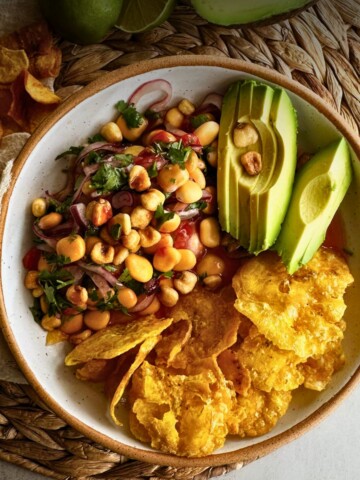
- Tostones are twice-fried green plantains with a sprinkle of salt. The crunch against the soft sauce is heaven on earth to me. If you don't want to make them from scratch, Walmart has really good premade tostones in the freezer section. Make them on the stove for the best flavor.
- Maduros are also really delicious with camarones enchilados. Walmart also has premade maduros in the freezer section that get a thumbs-up from me, but only if you make them on the stove.
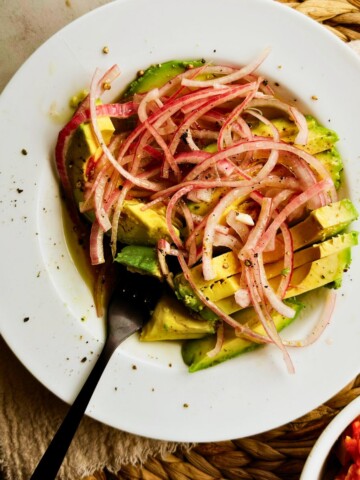
- Serve with Cuban avocado salad.
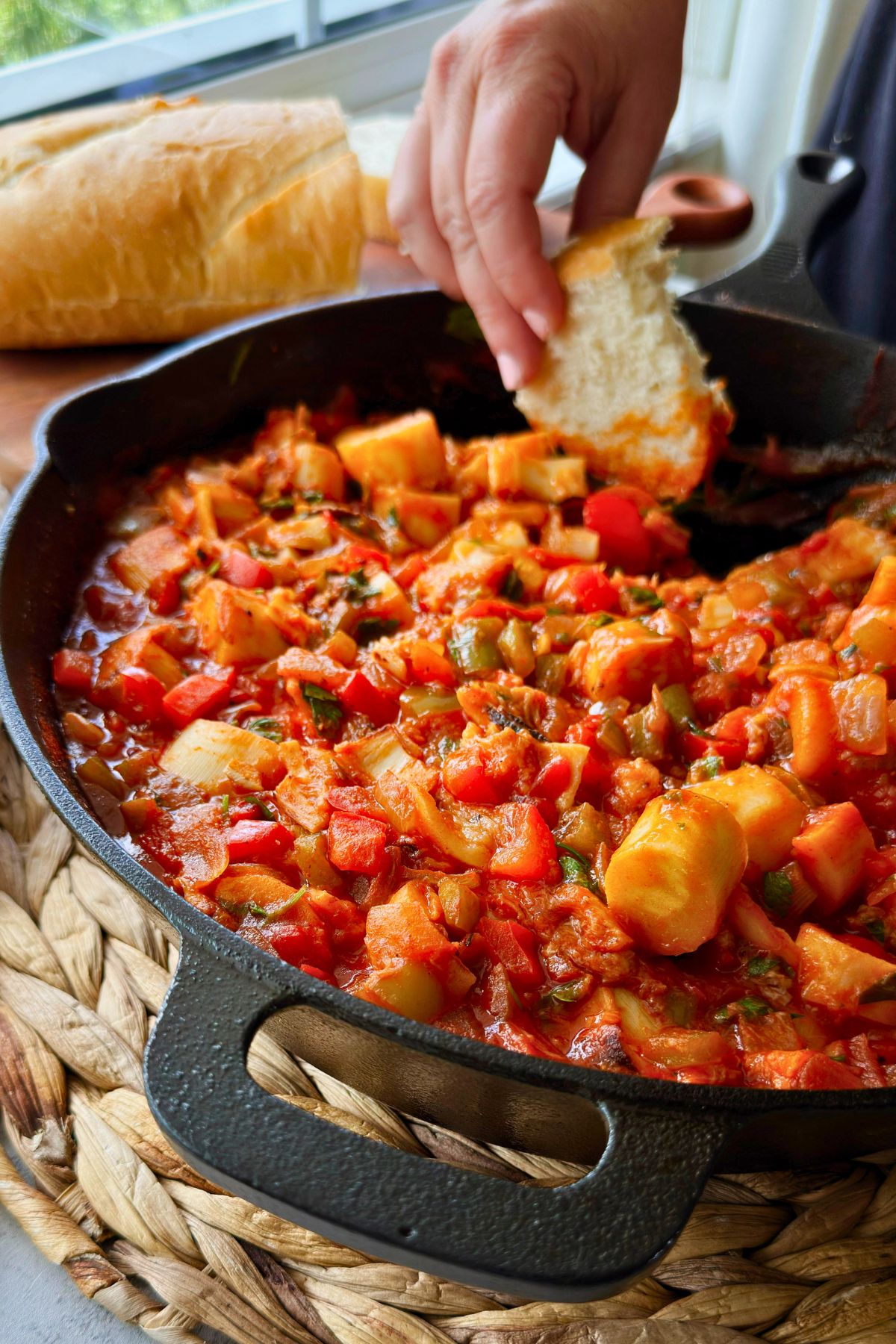
- Serve with Cuban bread or any other crusty bread. I'm telling you, the sauce deserves to be mopped up.
How to Store Camarones Enchilados
Refrigerator: Store in an airtight container for up to 3 days. The sauce tastes great as the sofrito and spices settle in. Reheat gently in a skillet over low heat with a splash of water or broth to loosen it, or microwave it for a quick reheat.
Freezer: If you're planning ahead, freeze the sauce separately and sear fresh hearts of palm when you're ready to serve.
Make ahead: Make the sauce up to 3 days in advance and refrigerate. On serving day, warm the sauce, sear your hearts of palm, and fold together. Takes about 10 minutes.
Vegan Camarones Enchilados FAQS
No. Enchilado in Spanish just means "in chili sauce." Cuban enchilado is a tomato-and-sofrito braise served over rice, with no tortillas involved at all.
Only mildly. Cuban cooking leans aromatic rather than hot, so the chili element is more warmth than fire. Start with the small amount of hot sauce specified in the recipe, and add more at the table if you want it.
Yes. Swap in an equal amount of vegetable broth plus a splash more vinegar. You'll lose a little depth, but the dish still works.
You don't, and the dish is still delicious without it. But it's the difference between a very delicious dish with no seafood flavor and something that actually has a hint of seafood taste and smell.
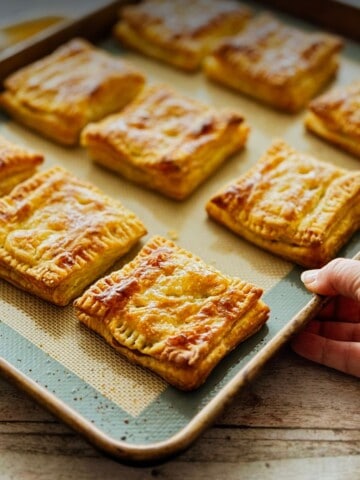
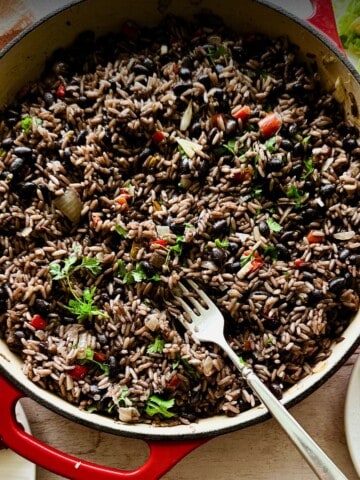
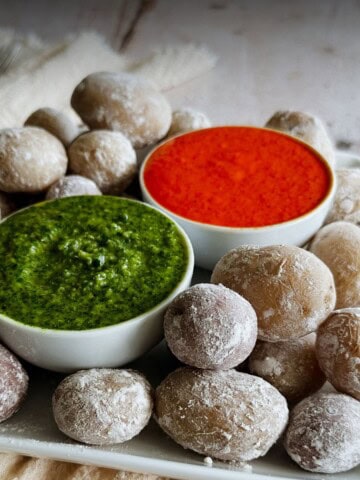
Drop a comment and tell me how these vegan camarones enchilados turned out! Was it love at first bite, surprisingly edible, or a full-on yuck? And if my directions helped (or didn't), please let me know so I can keep improving these recipes for you. Follow me on Pinterest, Instagram, Facebook, and YouTube for inspiration.
Recipe Card
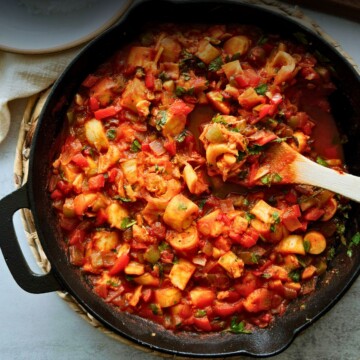
Vegan Camarones Enchilados

Equipment
Ingredients
For the brine: Optional for a slight ocean flavor* See notes
- 3 cups warm water
- 1 4-inch kombu or torn-up nori sheet
- 1 tablespoon lime juice
- 1 teaspoon salt
For the 'shrimp'
- 3 14-ounce cans whole hearts of palm cut into ¾-inch rounds*
For the sauce
- 4 tablespoons olive oil divided
- 1 medium onion chopped; yellow or white is fine
- 1 medium green bell pepper chopped
- 1 medium red bell pepper chopped
- 5-6 cloves garlic minced
- 1 4-ounce jar red pimientos chopped
- 1 teaspoon paprika Pimentón de la Vera
- 1 15-ounce can tomato sauce
- 1½ cups vegetable broth or 2 teaspoons of Better Than Boullion with 1½ cups of water
- ½ cup dry white cooking wine
- 2 teaspoons red wine vinegar optional if adding lime at the end
- 2 teaspoons vegan Worcestershire sauce
- 2 teaspoons hot sauce
- 1 teaspoon sugar
- ¼ cup fresh parsley chopped
- ½-1 teaspoon salt or to taste
- fresh black pepper to taste
- lime if desired to finish the dish

Instructions
- Prepare the brine (Optional): Combine the warm water, kombu, lime juice, and salt. Rinse and slice the hearts of palm and add them to the brine. Soak for 15 minutes while you chop the veggies. Remove the kombu, drain, and pat dry for better browning.
- Sear the hearts of palm: In a large pan, heat 2 tablespoons olive oil over medium-high. Working in batches, sear the pieces in a single layer for 3-5 minutes without moving them, then flip and sear 3-5 minutes more until golden. Transfer to a plate.
- Saute vegetables: Reduce heat to medium and add the remaining 2 tablespoons olive oil. Add onions, peppers, and garlic. Sauté 6-8 minutes or until the onions are translucent.
- Add the pimientos: Stir in the chopped pimientos and cook for 2 minutes, allowing their flavor to blend with the vegetables.
- Add the paprika: Make a well in the center of the vegetables and add the paprika. Let it cook in the oil for about 30 seconds, then stir it into the vegetables.
- Add the sauce ingredients: Stir in the tomato sauce, sugar, cooking wine, broth, vinegar, Worcestershire sauce, and hot sauce. Bring the sauce to a boil, then reduce the heat to low. Cover and simmer for 12-15 minutes to allow the flavors to develop.
- Return the remaining ingredients: Add the seared hearts of palm, parsley, salt, and black pepper to the sauce and gently fold them in. Simmer uncovered for 3-4 minutes, just until the hearts of palm are heated through and coated in the sauce. Finish with a squeeze of lime, if desired.
Regi Pearce says
Regi here — a note on this one. This version is the closest I've gotten to how I remember it. If you make it, come back and let me know how it went.