

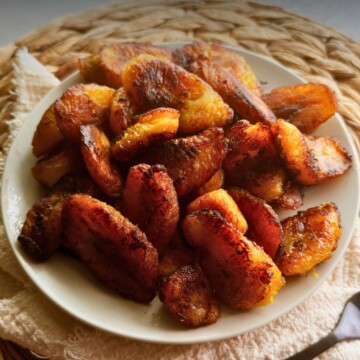
Plátanos maduros are ripe plantain slices pan-fried until deeply golden at the edges and soft and sweet in the middle. This classic Cuban side needs only ripe plantains, oil, and a few minutes at the stove.
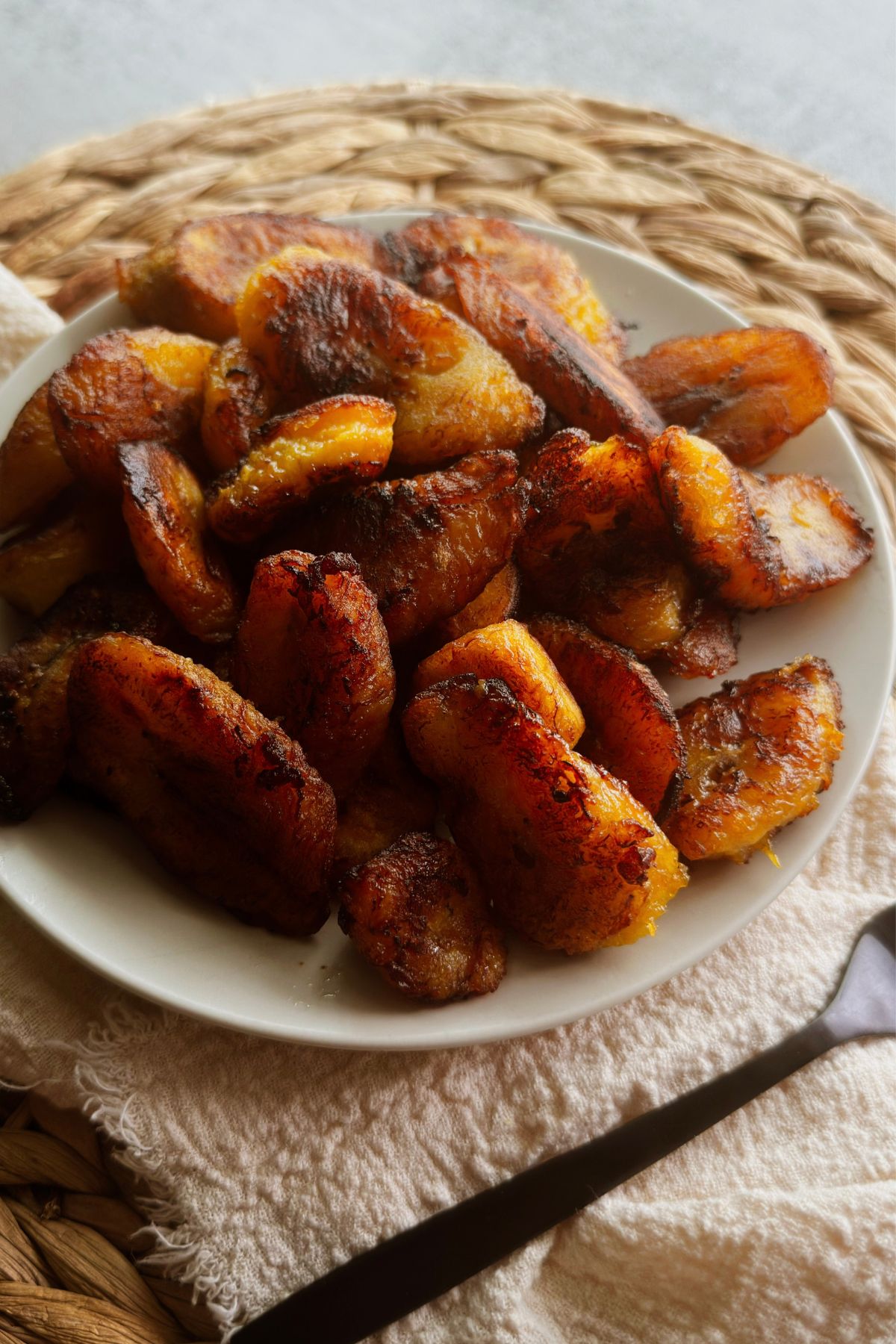
Growing up in a Cuban household in Miami, fried sweet plantains were a regular part of the table.
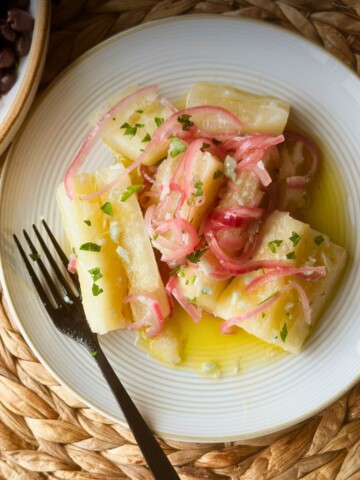
That little bit of sweetness is especially good next to savory Cuban black beans, yuca con mojo, vegan arroz con pollo, or vegan Cuban picadillo.
Jump to:
What Are Plátanos Maduros?
Plátanos maduros fritos are ripe plantains fried until caramelized. In my family, we call them platanitos maduros or simply maduros.
Unlike green plantains used for tostones, ripe plantains have yellow and black peels and softer flesh, which guarantees a more natural sweetness.
The plantains do not need added sugar. As they ripen, their starches turn to sugar, helping the slices brown in the pan and develop crisp, caramelized edges.
Why You'll Love This Recipe
- Two simple ingredients: Ripe plantains and a neutral oil.
- Ready quickly: Once the plantains are ripe, prep and cooking take about 15 minutes.
- Sweet and savory: Caramelized plantains balance savory beans, rice, and saucy Cuban dishes.
- Naturally vegan and gluten-free: No swaps are needed.
Ingredients
See the recipe card below for the full amounts.
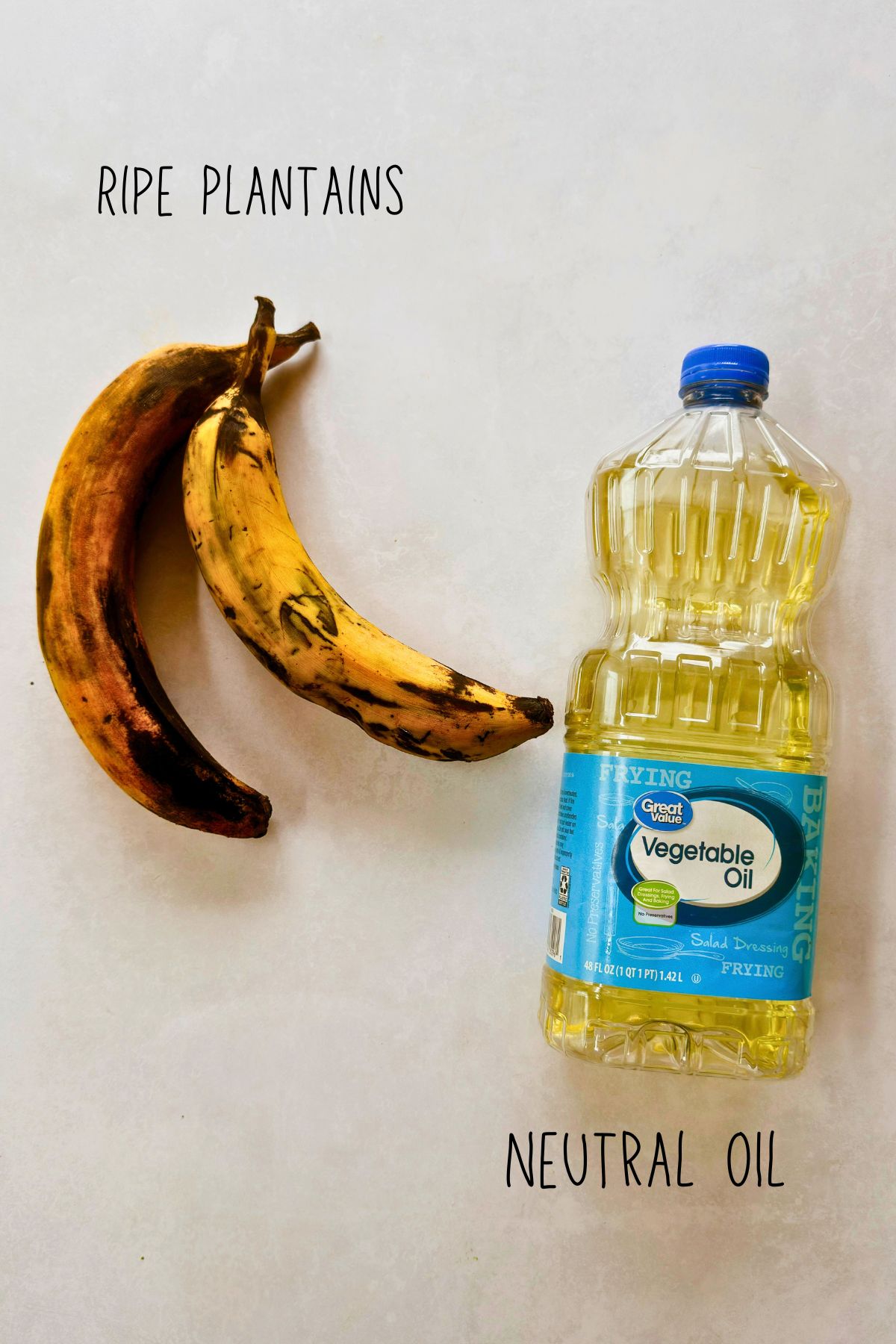
- Very ripe plantains: Look for peels that are heavily spotted or mostly black. The fruit should give slightly when pressed but should not feel watery or collapsed.
- Neutral oil: Vegetable, canola, or avocado oil works well. Use enough to generously coat the bottom of the skillet.
How Ripe Should Plantains Be for Maduros?
Yellow plantains are simply green plantains that have been allowed to ripen until their peels turn yellow and develop dark spots.
Ripeness is the most important part of this recipe. Yellow plantains with only a few dark spots are firmer and less sweet. For tender, caramelized maduros, wait until the peel is covered with large black patches or is nearly black and the plantain feels slightly soft.
If your plantains are not ready, leave them on the counter for several days. A loosely closed paper bag can help them ripen. Do not try to substitute green plantains - save those for tostones.
How to Make Plátanos Maduros
See the printable recipe card below for complete instructions.
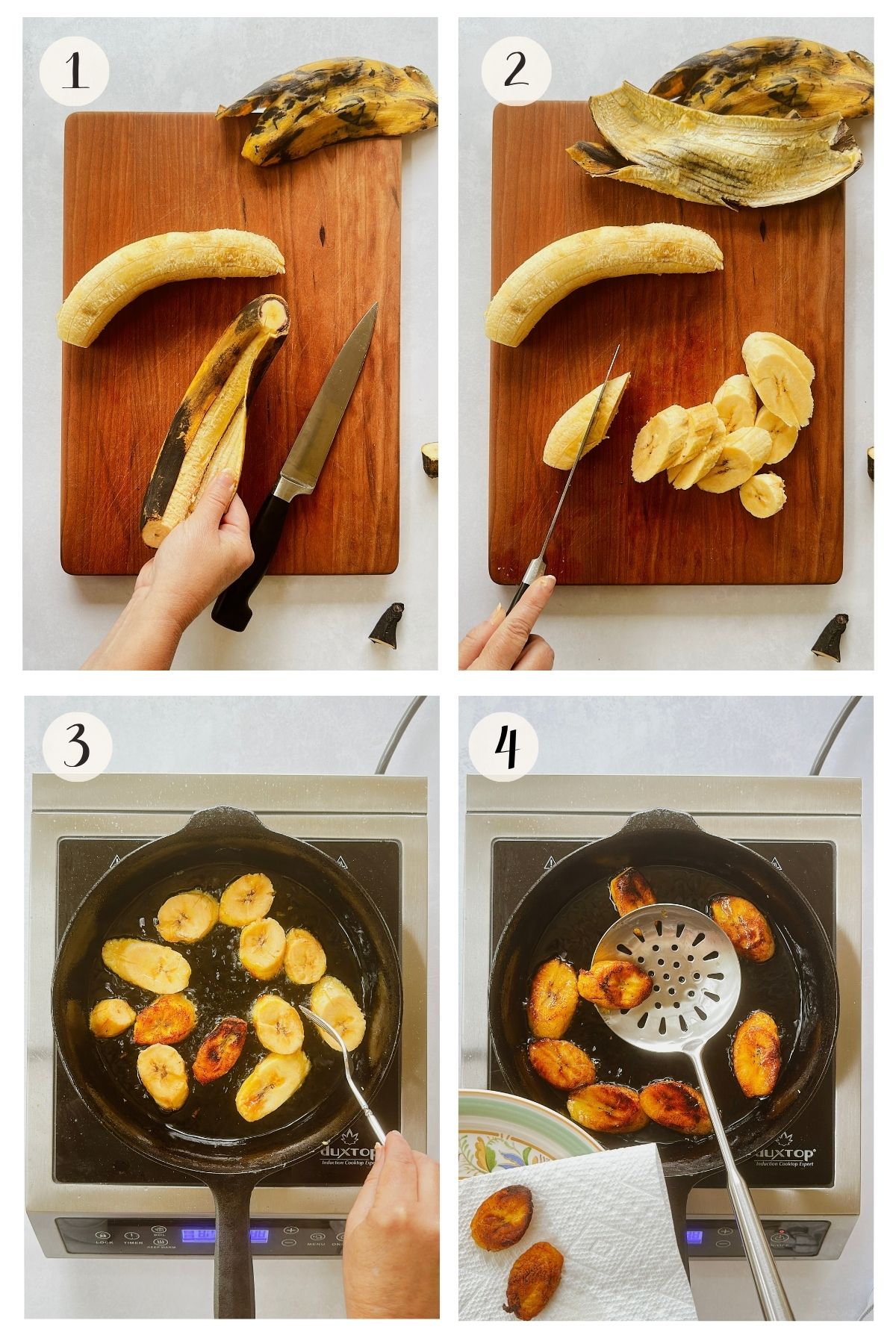
Step 1: Trim both ends, make a shallow slit along the peel, and remove it.
Step 2: Slice each plantain on a diagonal into pieces about ½ inch thick.
Step 3: Pour enough oil into a large skillet to generously cover the bottom. Add the slices in one layer without crowding the pan. Fry until the bottoms are deep golden, then turn and cook the second side.
Step 4: Transfer the maduros to a paper towel-lined plate or wire rack.
Regi's Tips
- Do not rush the ripening: A firm yellow plantain will not have the same soft, sweet center as a heavily spotted one.
- Keep the heat at medium: The sugars in ripe plantains can burn quickly over high heat.
- Leave room in the skillet: Cook in batches so the oil stays hot and each slice makes contact with the pan.
- Watch the color, not only the clock: Very ripe plantains brown faster than less-ripe ones.
- Serve right away: Maduros have their best texture while the edges are still freshly caramelized. Add a small pinch of salt, if you like, and serve warm.
What to Serve With Maduros
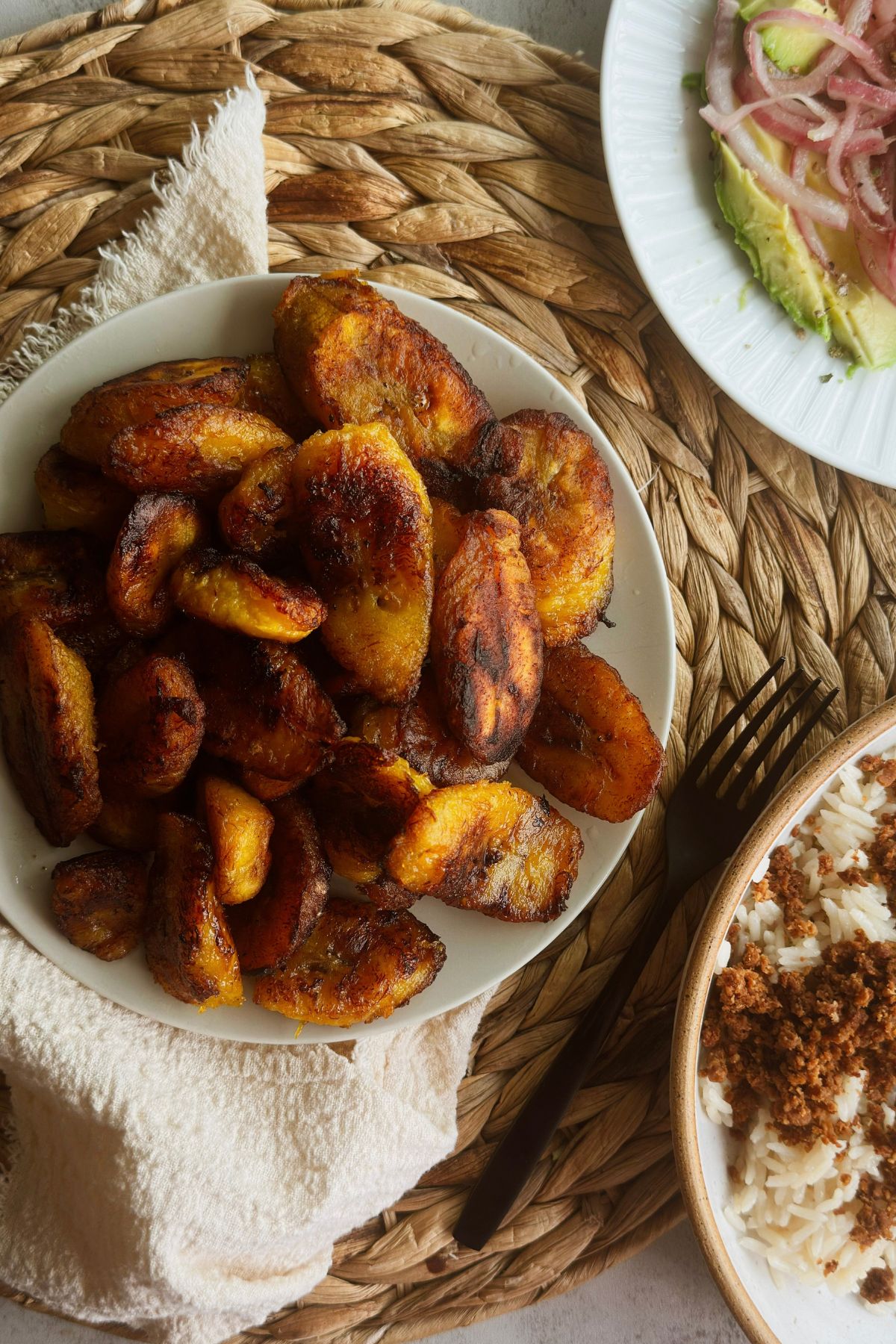
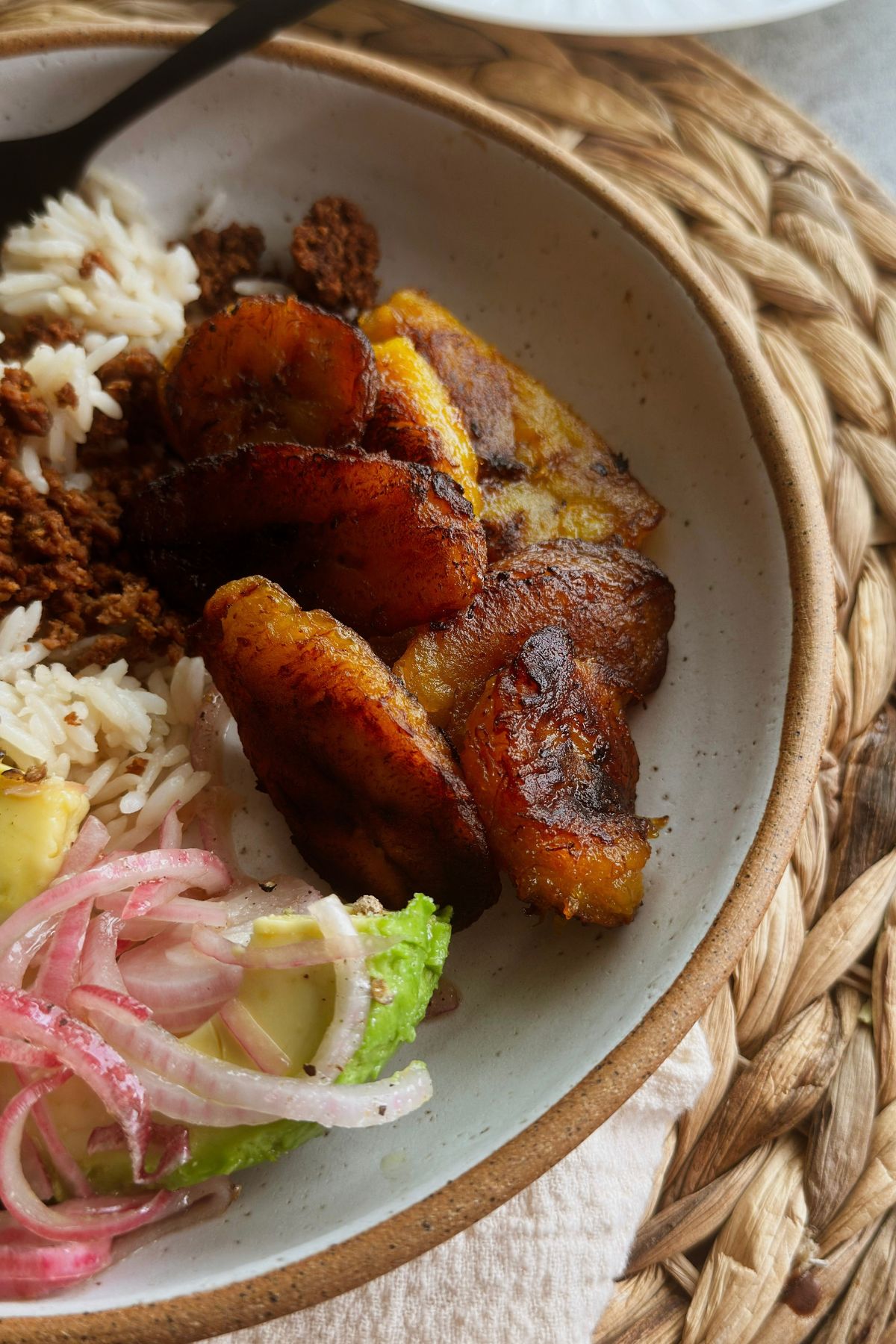
Serve plátanos maduros as the sweet side on a savory Cuban plate. They pair especially well with:
- Quick Cuban black beans and white rice
- Vegan Cuban picadillo
- Moros y Cristianos
- Cuban-inspired vegan fricasé
- Vegan camarones enchilados
For air-fried, baked, and microwave options, see my Sweet Plantain Recipe (4 Different Ways).
Storage and Reheating
Maduros are best straight from the skillet. Refrigerate leftovers in an airtight container after they cool. Reheat them in a lightly oiled skillet over medium-low heat until warm. The microwave also works, but the edges will be softer.
Maduros can be frozen as long as they are packed well in an airtight container or freezer-safe bag. Keep in mind that the texture may be a little softer after thawing.
Plátanos Maduros FAQs
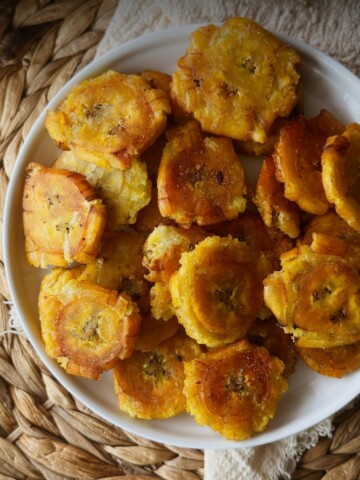
No. Maduros are made from ripe, sweet plantains and are fried once. Tostones are made from green plantains that are fried, smashed, and fried again, so they are savory and crisp.
They were probably not ripe enough. Wait until the peel has extensive black spotting and the plantain gives slightly when pressed.
Ripe plantains contain plenty of natural sugar, so they darken quickly. Use medium heat and lower it if the outside browns before the inside becomes tender.
Drop a comment and tell me how your plátanos maduros turned out! Was it love at first bite, surprisingly edible, or a full-on yuck? And if my directions helped (or didn't), please let me know so I can keep improving these recipes for you. Follow me on Pinterest, Instagram, Facebook, and YouTube for inspiration.
Recipe Card
Plátanos Maduros (Cuban Fried Sweet Plantains)

Ingredients
- 2 ripe plantains heavily spotted or mostly black, but not mushy
- ½ cup vegetable oil or enough to generously cover the skillet; canola or avocado oil also works

Instructions
- Peel and slice: Trim both ends off the plantains. Make a shallow slit lengthwise through the peel, then push your thumb under the edge of the slit and run it along the length of the plantain to lift the peel away. Slice the plantains on a diagonal into ½-inch-thick pieces.
- Heat the oil: Pour enough oil into a large skillet to cover the bottom generously. Heat over medium heat until a plantain slice sizzles gently when added to the pan.
- Fry the first side: Working in batches if needed, add the plantain slices in a single layer without crowding. Fry for about 3 minutes, until the bottoms are deep golden and caramelized.
- Flip and finish: Turn the slices and fry for another 3 minutes, until the second side is golden and the centers are tender. Reduce the heat if the edges darken too quickly.
- Drain and serve: When the plantains reach the desired color, transfer to a paper towel-lined plate or wire rack.
Regi Pearce says
If there’s one side dish I could eat with just about anything, it’s maduros! Sweet, caramelized, and so simple to make. This Cuban classic always makes its way to the table. I hope you love this recipe as much as I do!