

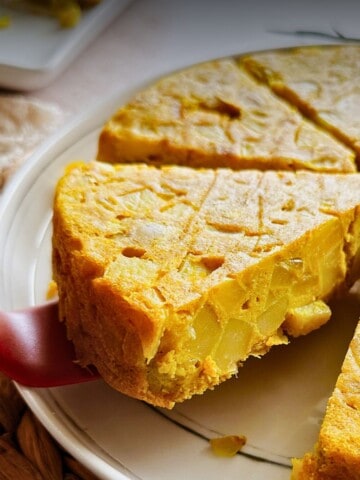
You'll find patatas bravas on menus all over Spain, and they're easy enough to make at home. Mine is the Madrid version: crispy fried potatoes under a smoky paprika sauce, no tomato anywhere near it. Serve it for tapas night alongside Papas Arrugadas (Wrinkled Potatoes) and Vegan Spanish Omelette (Spanish Tortilla).
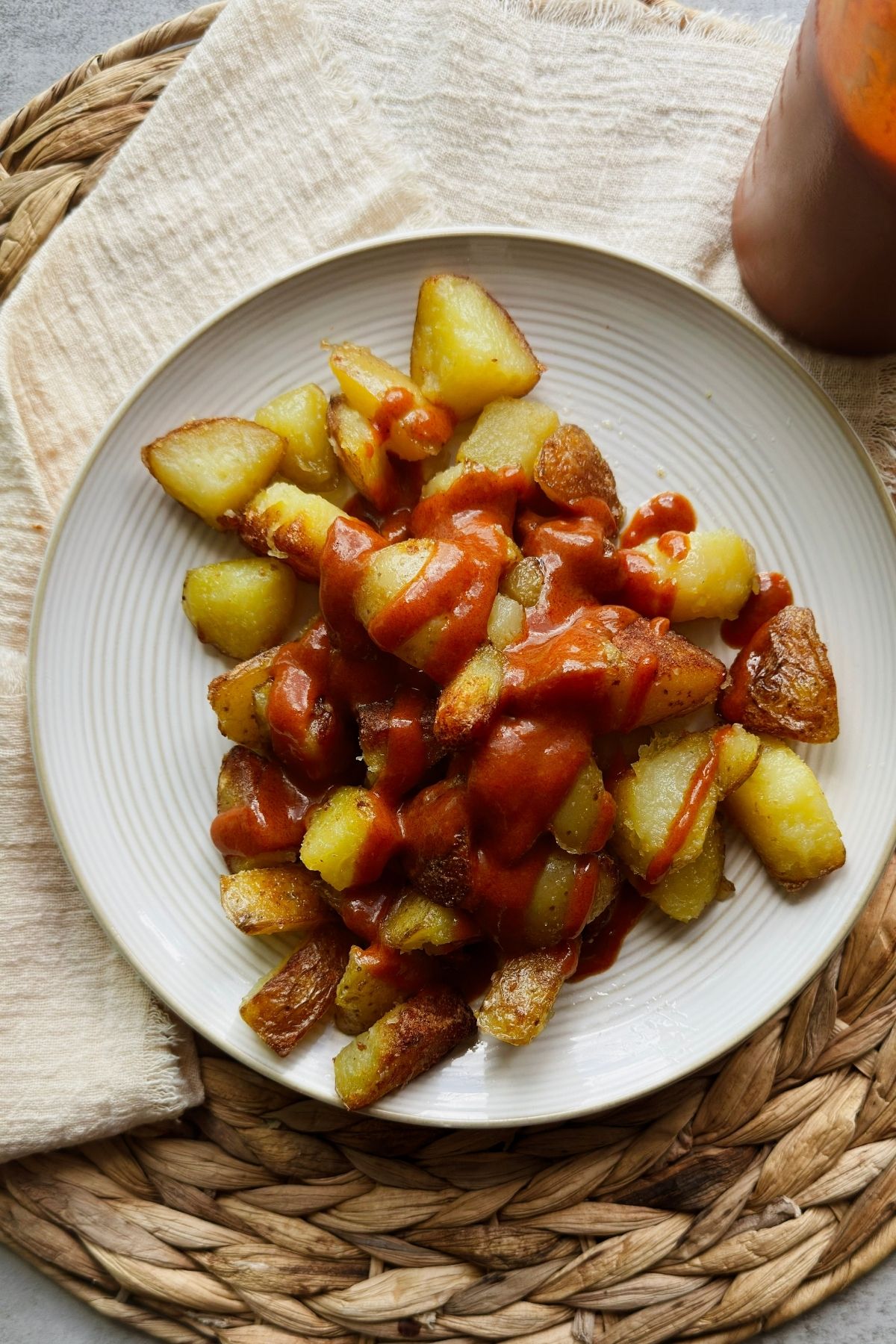
This bravas sauce style comes from Madrid: a roux of olive oil and flour, thinned with vegetable broth and loaded with good smoked paprika. Regional versions add garlic, onion, or tomato, all legitimate. I stick with the plainest one, and that's the appeal - one small saucepan, no blender, done in less than ten minutes but still a punch of flavor.
I put this sauce on everything. Roasted vegetables, tofu, chickpeas - everything is better with this sauce.
The traditional method for the potatoes is a double fry. I parboil and fry once instead, which uses less oil and gets you most of the way there. Cook the potatoes however you like though - roasted, air-fried, one-fry, or the traditional double fry.
Jump to:
Why This One's on Repeat
- Five-ingredient sauce - Oil, flour, pimentón, broth, vinegar. It comes together in less than ten minutes while the potatoes chill.
- Less oil - Parboiling replaces the traditional long, low fry, so the potatoes meet hot oil only once and absorb far less of it but it still tastes great!
- Make-ahead friendly - Sauce keeps for about 5 days. Parboiled potatoes can sit in the fridge overnight and actually fry better the next day.
- Cheap. It's potatoes and paprika. Spend the money on good pimentón, and you've spent your money well.
Shopping List
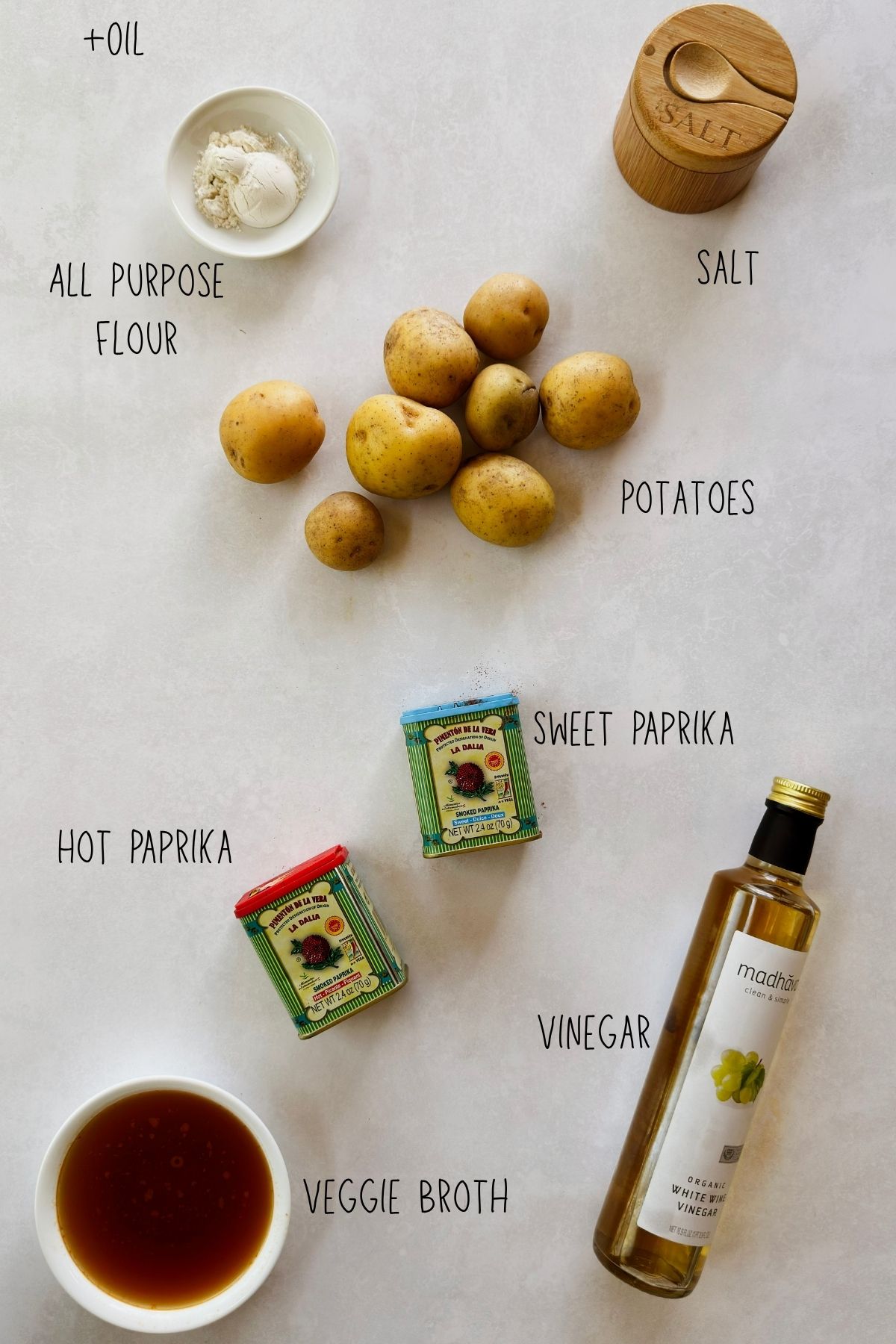
- Paprika - This sauce is mostly paprika, so the paprika matters more than usual. Pimentón de la Vera (dulce/sweet) and Pimentón de la Vera (picante/hot) are Spanish smoked paprika from the La Vera valley, dried over oak smoke, so their flavor differs from the generic jar labeled "smoked paprika." Buy the tins and use them in Spanish Vegetable Paella and Sopa de Ajo (Spanish Garlic Soup). Note: Dulce means mild, not sweet. It's the same logic as calling a bell pepper a sweet pepper - sweet is the opposite of hot, not the opposite of savory in this context.
- Potatoes - You want potatoes that hold together through boiling and frying. Yukon Gold is the easiest to find in the U.S and the closest stand-in for Spanish patata agria. Use Kennebec if your market carries them.
- Olive oil - I use regular olive oil (sometimes vegetable). Olive oil is what they fry with in Spain, and it's part of the flavor.
- Vegetable broth - Do not use a herbed broth that will compete with the paprika. I like to make my own or use Better Than Boullion.
See the printable recipe card for quantities and a full list of ingredients.
Make It Your Own
- The traditional tapas bar style is a double-fry. Skip the boiling water entirely and fry twice in olive oil. First fry at 275°F for about 15 minutes, until a knife slides in but the potatoes are still completely pale. Drain and cool at least 20 minutes. Then fry at 400°F for about 5 minutes until deep golden. Slightly richer crust, more authentic but way more oil absorbed.
- You can also do an oven method. Same parboil, then dry the potatoes and toss with olive oil, spread on a preheated sheet pan, and roast at 425°F for 15 minutes, turning twice. The crust is thinner and drier than fried, but the sauce carries it.
- Air fryer. Parboil and add to a 400°F air fryer for 18-22 minutes, shaking the basket twice. Work in batches since a crowded basket steams.
- Add a garlic sauce. In Catalonia, bravas often arrive with allioli alongside the red sauce or in place of it. Traditional Catalan allioli is nothing but garlic, salt, and olive oil beaten into an emulsion by hand.
- Dial up the heat. A teaspoon of picante is a moderate burn. Bar versions run hotter. Adjust the picante to taste.
Let's Make Patatas Bravas
See the complete printable recipe card below for the details.
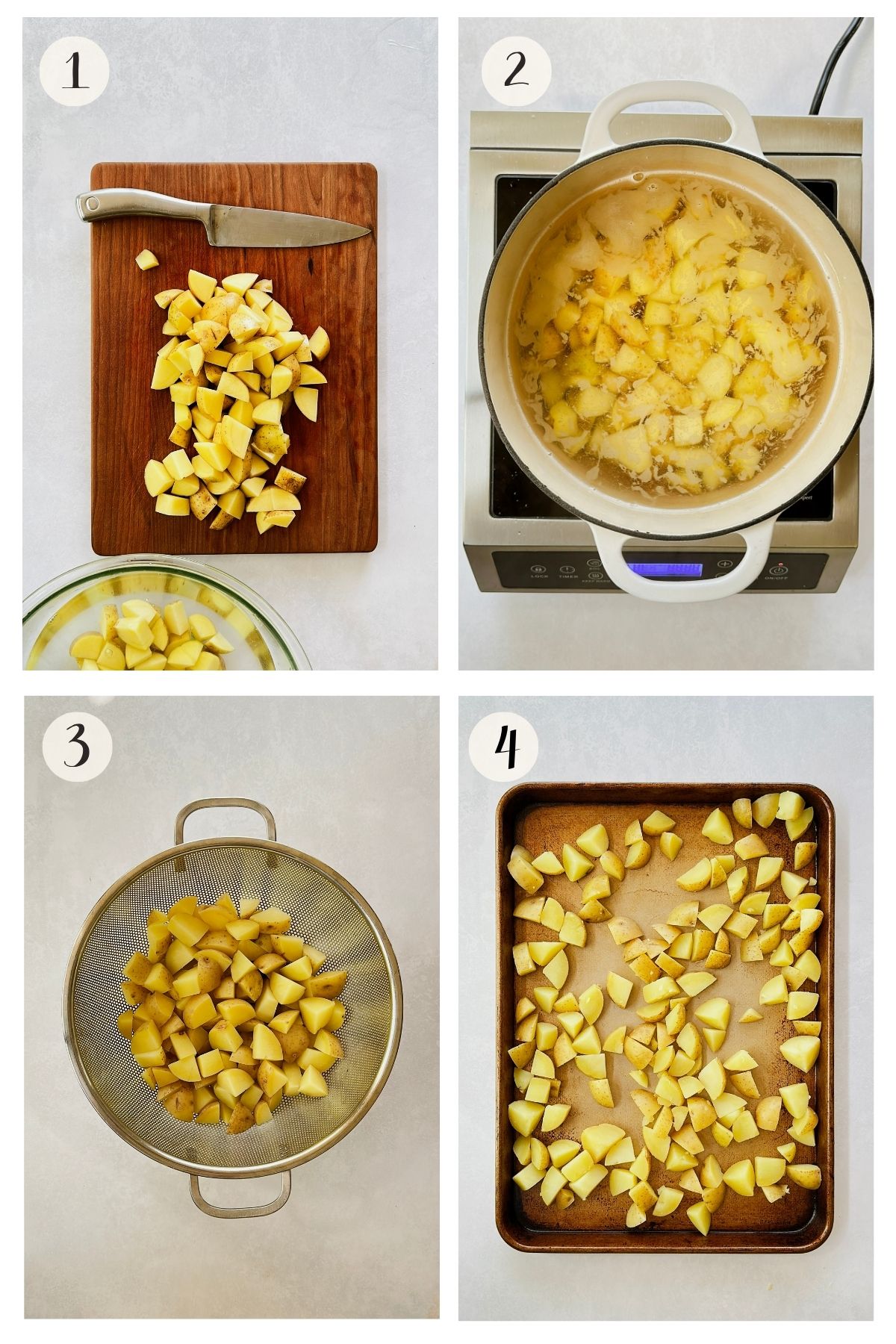
Step 1: Cut the potatoes - Cut the potatoes into even ¾-inch chunks.
Step 2: Boil - Add the potatoes to a pot of salted water. If you want the potatoes craggy, add the optional baking soda too. Bring to a boil and cook until just fork-tender.
Step 3: Drain - Pour into a colander and let sit for a few minutes to let steam escape and dry out. If you added the baking soda and want the potatoes craggy, give it a good shake, till they're roughed up.
Step 4: Dry them out - Spread the potatoes in a single layer on a sheet pan and let them air-dry completely. Dry surfaces create crisper edges. Make the sauce while you wait.
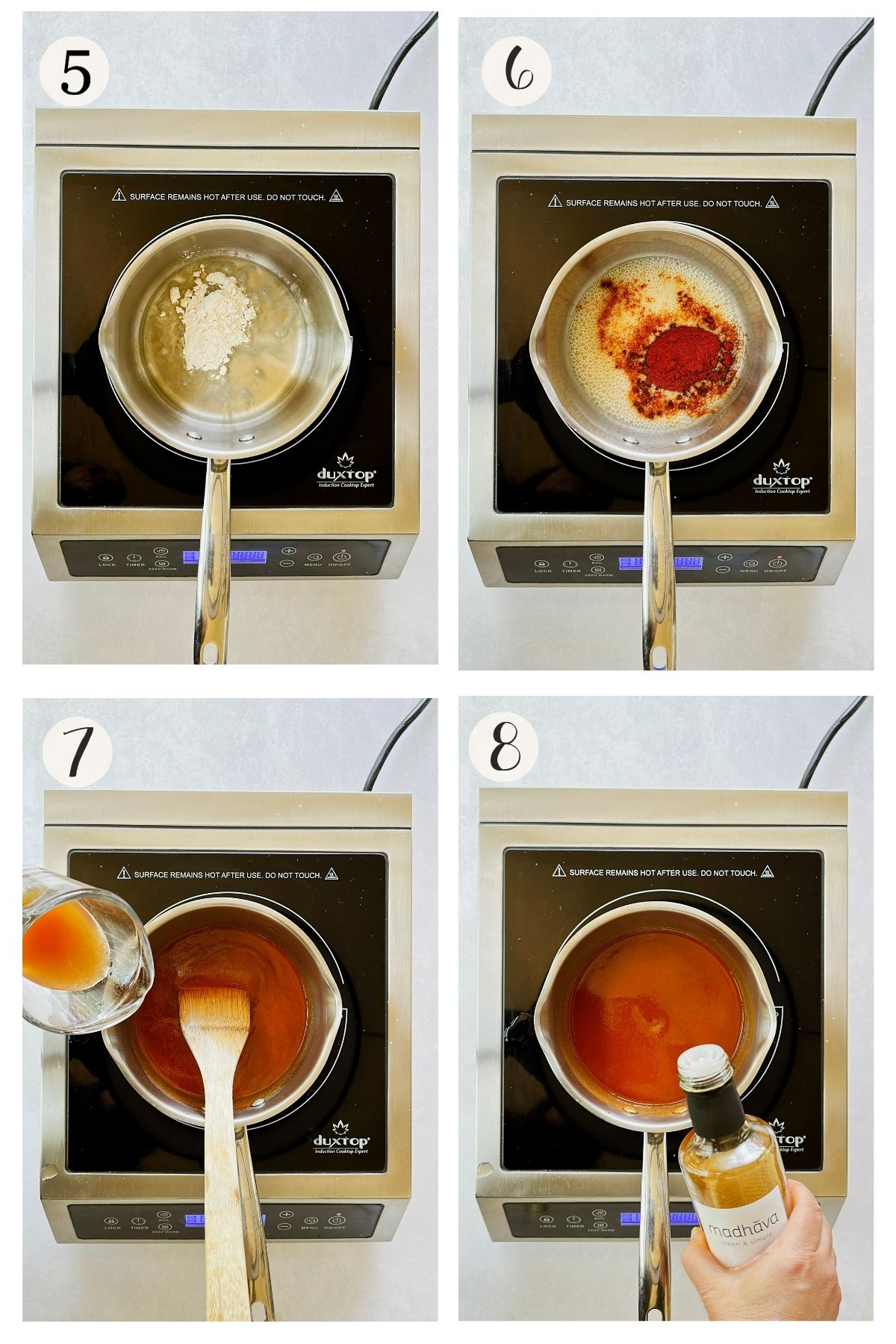
Step 5: Start the roux - Preheat the oil in a small saucepan over medium-low heat and whisk in the flour. Cook just under a minute, until it smells toasty.
Step 6: Bloom the paprika - Stir in the smoked paprika. Paprika scorches fast and turns bitter, so check the temperature is right and constantly stir for about 30 seconds until it is incorporated.
Step 7: Add the liquid - Slowly pour in the broth, whisking constantly. Simmer for a few minutes until the sauce thickens a bit. This is not a thick sauce, but you will notice a thickness to it.
Step 8: Finish and season - Stir in the vinegar and salt to taste. Set aside.
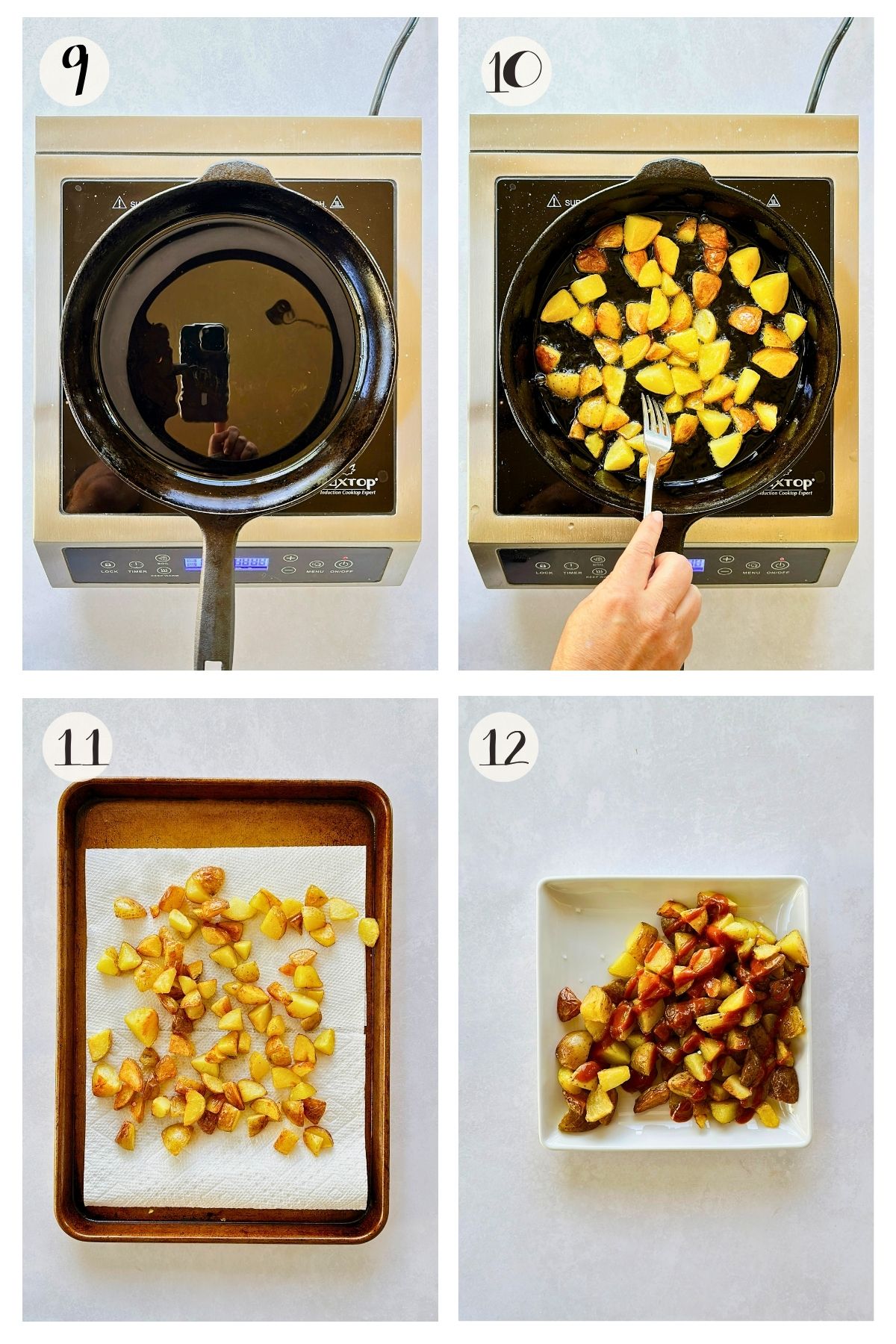
Step 9: Heat the oil - Add enough oil to skillet to cover the bottom. Heat over medium until it shimmers.
Step 10: Fry - Add the potatoes in a single layer and fry, turning occasionally, until golden and crisp on all sides. Work in batches so you don't overcrowd the pan.
Step 11: Drain - Transfer to a paper towel-lined sheet pan or cooling rack and season with salt while they're still hot.
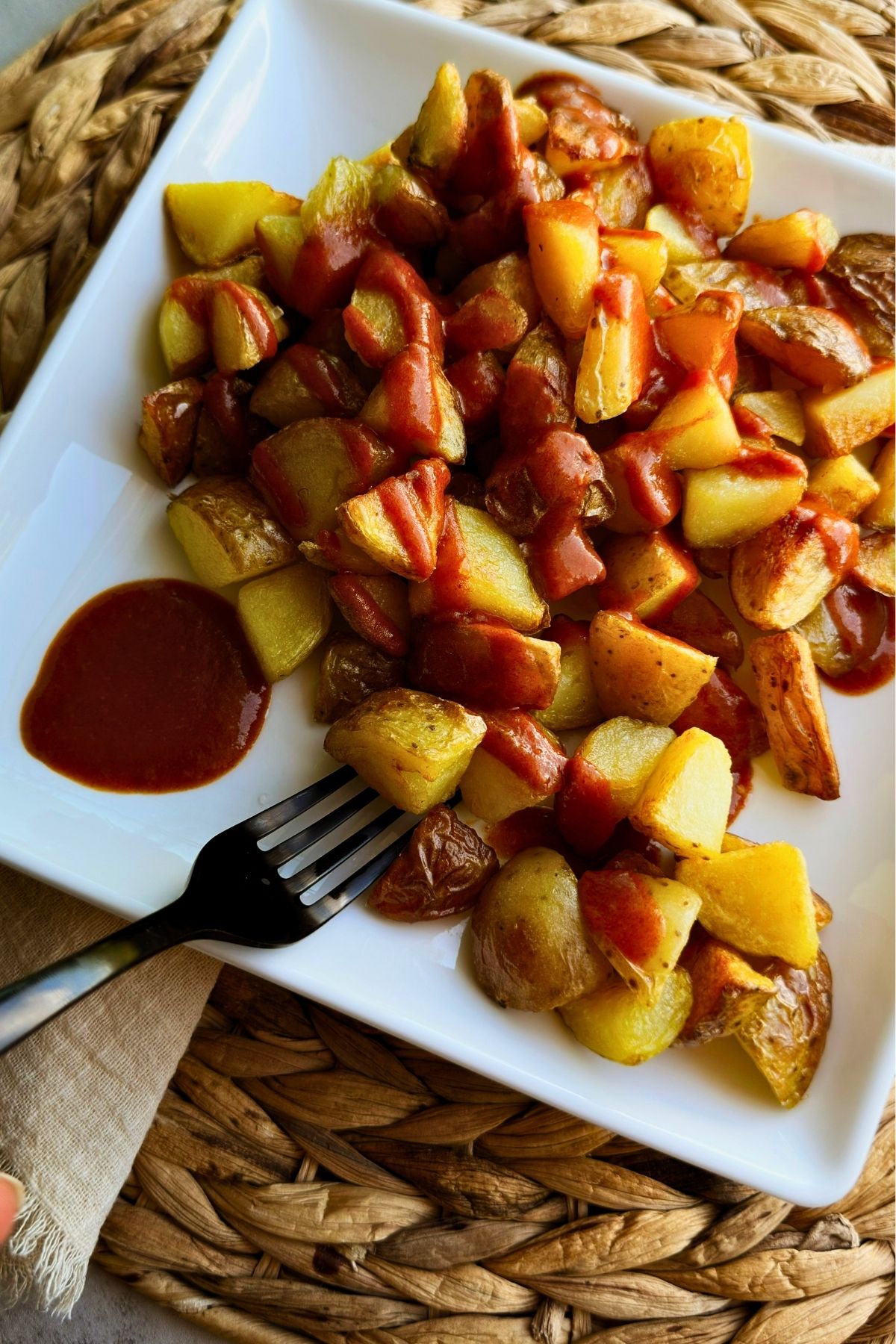
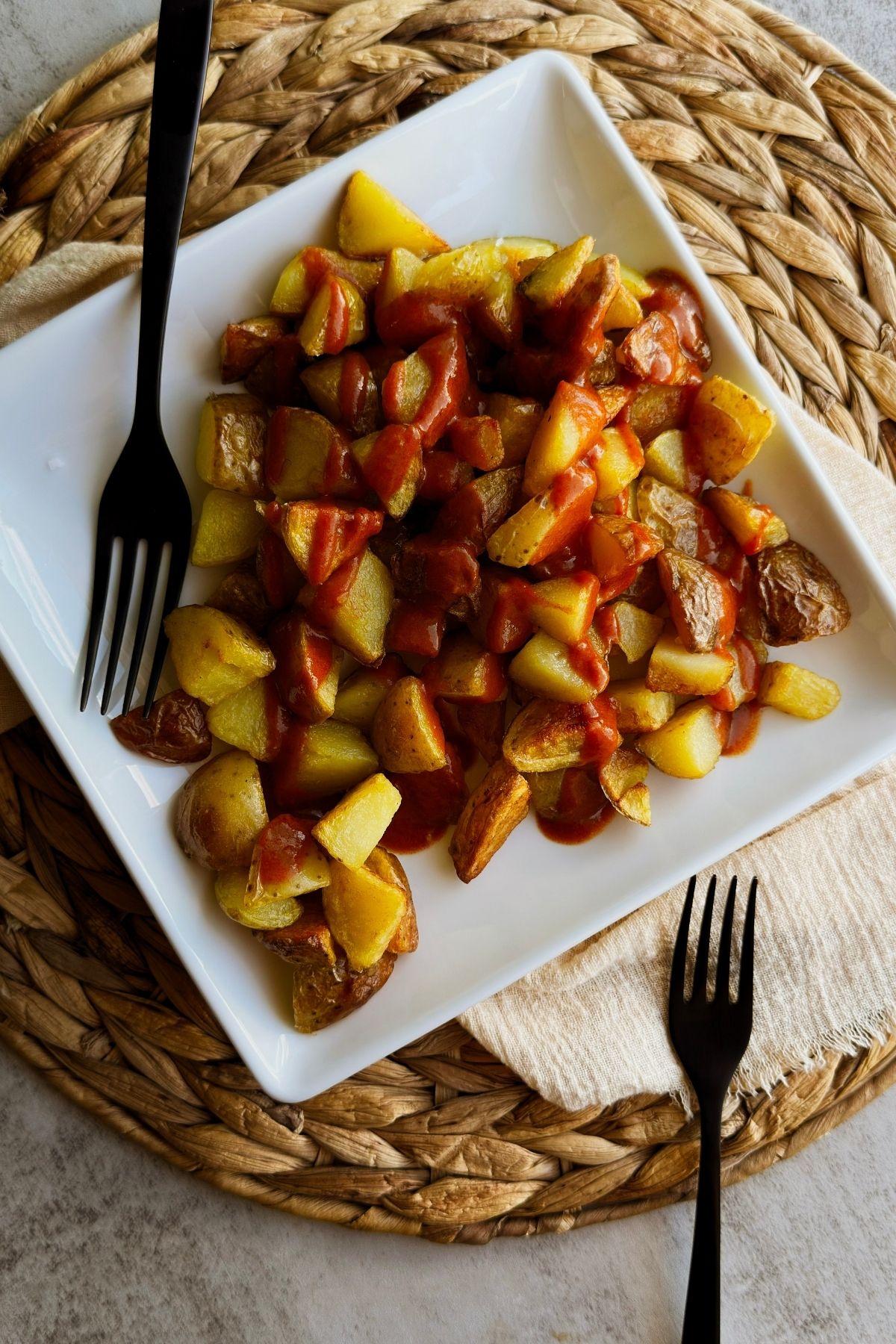
Step 12: Serve - Pile the potatoes onto a plate and spoon the sauce over the top. Serve right away, while the edges are still crisp.
Top Tips
- Dry out the potatoes well. A parboiled potato is full of water, and a damp one hitting hot oil spits hard. Steam-dry, then chill uncovered. Lower them in with a spider if you have one and keep your face back.
- Don't cover the potatoes in the fridge. Trapped condensation undoes the entire drying step.
- Salt the boiling water properly. A tablespoon assumes about four quarts but scale it to your pot.
- Warm your broth. Cold liquid hitting a hot roux is how you get lumps. It doesn't need to be hot, just not straight from the fridge.
Serving Suggestions
- As part of a tapas spread with pan con tomate, marinated olives, blistered padrón peppers, and a bowl of almonds. Bravas are meant to share at the table.
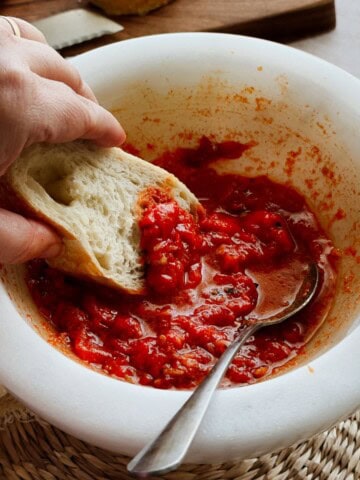
- Alongside Papas Arrugadas if you're doing a potatoes-of-Spain night, which I fully endorse.
- As a side for anything grilled and smoky like Grilled Chimichurri Tofu.
- Leftover sauce is excellent on roasted cauliflower, folded into rice, or spooned over High Protein Tofu Scramble at breakfast.
Storage Notes
This sauce is thin enough to pour, so I keep mine in a squeeze bottle instead of a jar. This makes drizzling look intentional. Spooning looks like the potatoes had an accident, and I'm not gifted enough with a spoon to close that gap. I picked mine up at my grocery store, but here's one on Amazon for reference. Let the sauce cool first - these bottles warp with hot liquid. Five days in the fridge either way.
The sauce keeps well, but the potatoes don't. If you know you'll have leftovers, store them separately and sauce each serving as you go.
Store the potatoes parboiled if you're making ahead then refrigerate them uncovered on the sheet pan for up to a day. The cold, dry surface actually fries up better when you're ready to eat.
Patatas Bravas FAQS
These are! The sauce is olive oil, flour, paprika, veggie broth, and vinegar. Watch out when eating out. Most recipes and restaurants use chicken stock in the bravas sauce.
The potatoes are best fresh, so save the frying for when you're ready to eat. You can get ahead on them up to the parboil, though - boil, drain, and dry them, then refrigerate on the sheet pan for up to a day and fry straight from the fridge. The sauce can be made in advance for sure, and keeps for up to five days.
Only mildly. Brava means fierce, but the heat is meant to build gently rather than hit hard. The pimentón carries both smoke and warmth, so you taste paprika first, then heat. Adjust the hot smoked paprika up or down to suit your taste buds.
More Spanish Recipes

Drop a comment and tell me how these Patatas Bravas turned out! Was it love at first bite, surprisingly edible, or a full-on yuck? And if my directions helped (or didn't), please let me know so I can keep improving these recipes for you. Follow me on Pinterest, Instagram, Facebook, and YouTube for inspiration.
Recipe Card
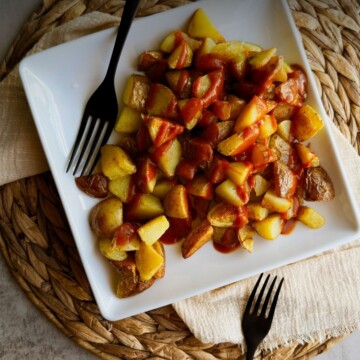
Patatas Bravas (Crispy Spanish Potatoes with Smoky Paprika Sauce)

Ingredients
- 2 pounds waxy or all-purpose potatoes Kennebec, Yukon Gold, or Agria - to peel or not to peel is up to you
- 1 tablespoon salt for the boiling water
- 1 teaspoon baking soda optional* See note
- ¼ cup olive oil for frying
- ½ teaspoon salt coarse salt is great for finishing
Bravas Sauce
- 3 tablespoons olive oil
- 1½ tablespoons all-purpose flour
- 2 teaspoons smoked sweet paprika pimentón de la Vera dulce
- 1 teaspoon hot smoked paprika pimentón de la Vera picante - adjust to taste
- 1 cup vegetable broth warm
- ½-1 teaspoon white wine vinegar
- ¼ teaspoon salt adjust to taste

Instructions
- Cut the potatoes: Cut into rough ¾ to 1-inch chunks.
- Parboil: Cover potatoes in a large pot of water by an inch. Add about a tablespoon of salt and baking soda (if using), then bring to a boil. Cook on high until a knife meets slight resistance at the center. It should be tender at the edges, not falling apart. Start checking at 7-8 minutes after it starts boiling.
- Steam-dry: Drain and leave in the colander until the steam stops and the surfaces look matte, about 5-10 minutes. Skipping this leaves water in the potato, which has to come out later in hot oil.
- Rough up the potatoes (optional): If you used the baking soda, roughing up the edges is easy. Grip the colander and shake it hard four or five times, until the edges look visibly fuzzy. Stop before the pieces start breaking apart. Those roughed-up edges are what fry into the craggy crust.
- Chill uncovered: Spread in a single layer on a rack over a tray and refrigerate uncovered for at least 20-30 minutes.
- Start the roux: While the potatoes chill, heat 3 tablespoons olive oil in a small saucepan over medium-low heat. Wait for the oil to heat up for about 2 minutes. Add the all-purpose flour and cook, stirring constantly, until the flour disappears, it smells toasty, and it turns pale straw (don't let it brown though). This takes less than a minute.
- Bloom the pimentón: Stir in the sweet and hot paprika. Incorporate it well into the mixture - about thirty seconds is plenty. Burnt paprika is bitter and unfixable, so err on the side of less time.
- Build and finish the sauce: Slowly whisk in warm vegetable broth, smoothing the sauce between each pour. Once well mixed and fully incorporated, stir in the salt and vinegar. Taste and adjust for salt and set aside.
- Fry: Remove the potatoes from the fridge and pat them dry to reduce spitting and get a better crust. Heat enough oil on medium to cover the bottom of a skillet. Add the potatoes in batches, stepping back as needed. Fry until golden. Don't crowd the pot - the temperature drop is what makes them greasy.
- Salt and serve: Drain on a rack or paper towel, and finish with salt while they're still glossy. Pile into a shallow dish and spoon the sauce over in a wide ribbon, leaving some potatoes bare. Eat within a few minutes.
Regi Pearce says
These vegan patatas bravas are a family favorite! So easy to make and full of flavor, so I put this sauce on everything!