

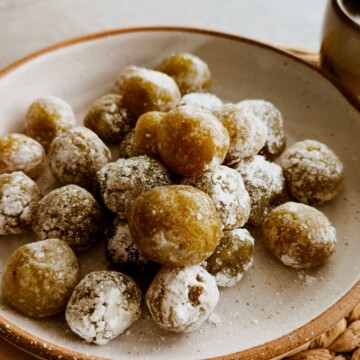
This Boniatillo Seco is the firm candy cousin of Cuba's beloved, spoonable Boniatillo Con Coco or sweet potato pudding. It's slightly firm on the outside with a chewy center, warm with cinnamon and a little citrus, and it's great for holiday tins, an afternoon cafecito, or any time you want a dessert that is easy to make for any day of the week.
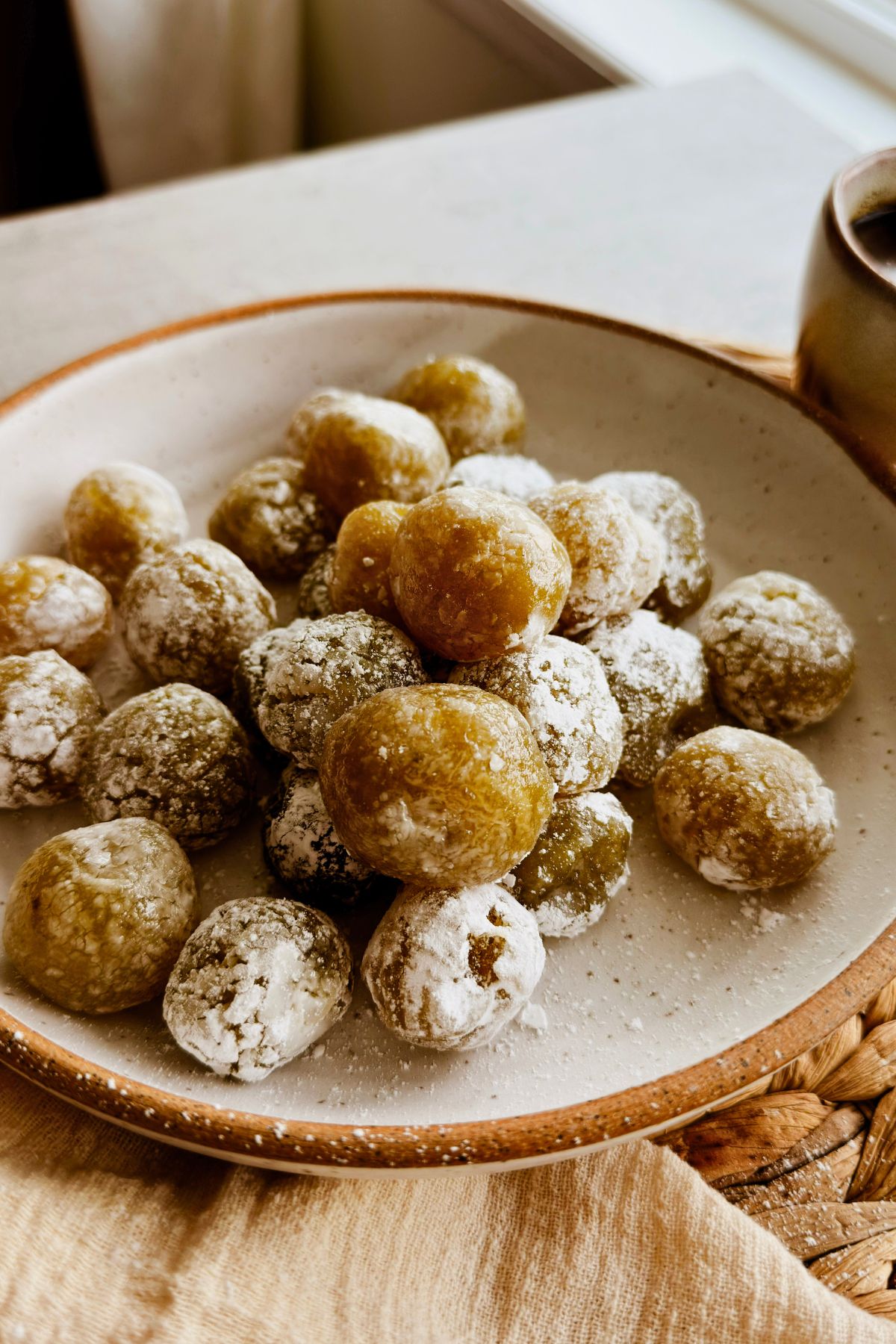
Boniatillo seco is a sweet potato candy, firm enough to eat with your fingers and sweet enough to satisfy any candy lover.
I grew up eating it in Miami when we bought it at Sedano's (a Cuban grocery store in Miami). When I recently mentioned boniatillo to my mom, she immediately remembered buying it from street vendors as a little girl in Cuba.
Boniatillo seco is often made in Cuban homes, but to my mom, getting one from a vendor was a special treat.
That memory is part of what I think about when I make these today - a simple Cuban sweet made from boniato and sugar, and a little taste of her childhood that has stayed with her all these years.
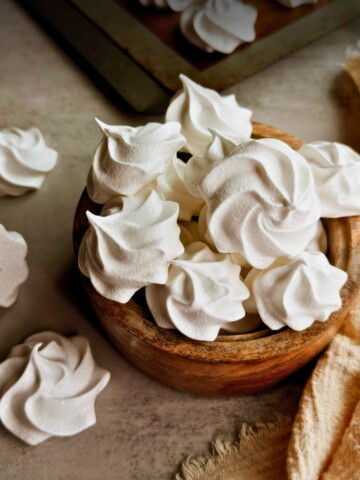
If you're into tropical desserts like my Pastelitos de Guayaba, Vegan Cuban Pudín de Pan (Bread Pudding), or Cuban Suspiros (Meringue Cookies), this dessert will fit right in.
Jump to:
What Is Boniatillo Seco?
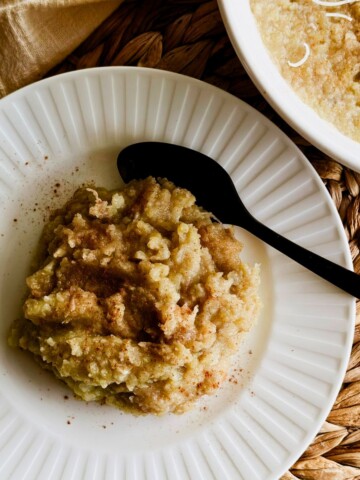
Boniatillo is Cuba's sweet potato dessert and one of the island's most beloved sweets. Most people know the soft version - spoonable and custardy, like the Boniatillo Con Coco (Cuban Sweet Potato and Coconut Dessert) I have here on the site.
Seco means dry, and that's what makes this one different. It's a very similar dessert but cooked longer - past pudding - until the paste pulls cleanly away from the sides of the pan in a single mass. Cooled and rolled, it turns into something you eat with your fingers, with a slightly firm exterior and a chewy center.
Why You'll Love This Recipe
- Five ingredients - It's super easy to make.
- Naturally vegan - No egg yolks, no dairy, no substitutions standing in for something else.
- Naturally gluten-free - No flour anywhere in it.
- One pot and a wooden spoon - No candy thermometer, no stand mixer, no special pans. If you can stir, you can make this.
- It keeps for weeks - The sugar is the preservative, so a batch made today is still good long after most desserts would be gone.
- Perfect for gifting - Rolled and dusted in powdered sugar, they look like something from a bakery case and travel beautifully in a tin.
- A real piece of Cuba - This is the candy street vendors sold and home cooks made easily.
Shopping List
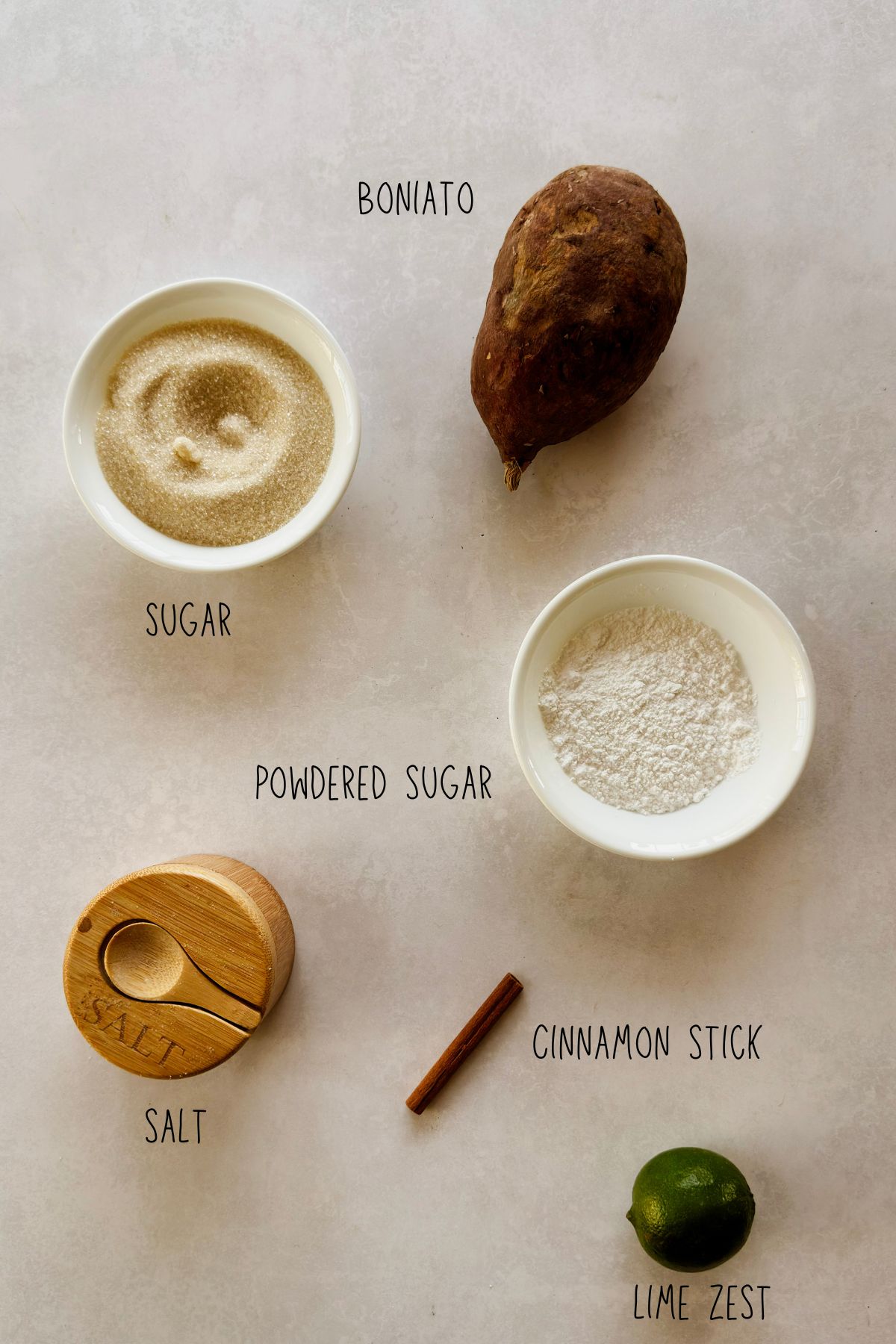
Boniato - This is the one ingredient worth going out of your way for. Boniato is sometimes labeled Cuban sweet potato, batata, or camote. It has a burgundy or dusty rose color, and dry, pale, almost white flesh. It is gently sweet rather than candy-sweet, and it's noticeably starchier and less watery than the orange sweet potatoes in most American supermarkets. That dryness is what lets the candy set firm without cooking forever. Look for it at Latin, Caribbean, and Asian markets, usually near the yuca and malanga. Pick one that feels heavy and firm with no soft spots. The only substitute that will work is the Japanese sweet potato, which is also a white-fleshed sweet potato you can find at Whole Foods.
Sugar - Equal weight sugar to boniato is the classic ratio. I know it's a lot, but it's doing more than sweetening. The sugar is the setting agent and the preservative - it's why this keeps at room temperature for weeks. I do not recommend cutting back. Use organic sugar to keep it vegan.
Lime zest - Sweet potato and sugar cook together to make something rich but a little one-note. The lime adds a lot and is the most traditional add-in and the sharpest. Lemon is a close second. Orange is the gentlest and makes the whole thing taste more like a holiday cookie.
Powdered sugar, for rolling. This is what turns a rustic paste into something that looks like it came from a bakery case. It also keeps the balls from sticking to each other on the tray.
See the printable recipe card for quantities and a full list of ingredients.
Make It Your Own
- Dry sherry - The most traditional addition if you like the flavor. Stir in a tablespoon of dry sherry.
- Vanilla extract or almond extract - Half a teaspoon off the heat rounds out the sugar.
- Toasted coconut - Press into the top before the paste sets, or roll the finished balls.
- Warmer spice - A clove or a star anise in the boiling water alongside the cinnamon, or a pinch of ground nutmeg stirred in at the end makes a nice variation.
How to Make Boniatillo Seco
With just a handful of ingredients and these easy instructions, you'll be enjoying one of Cuba's most delicious treats.
See the complete printable recipe card below for the details.
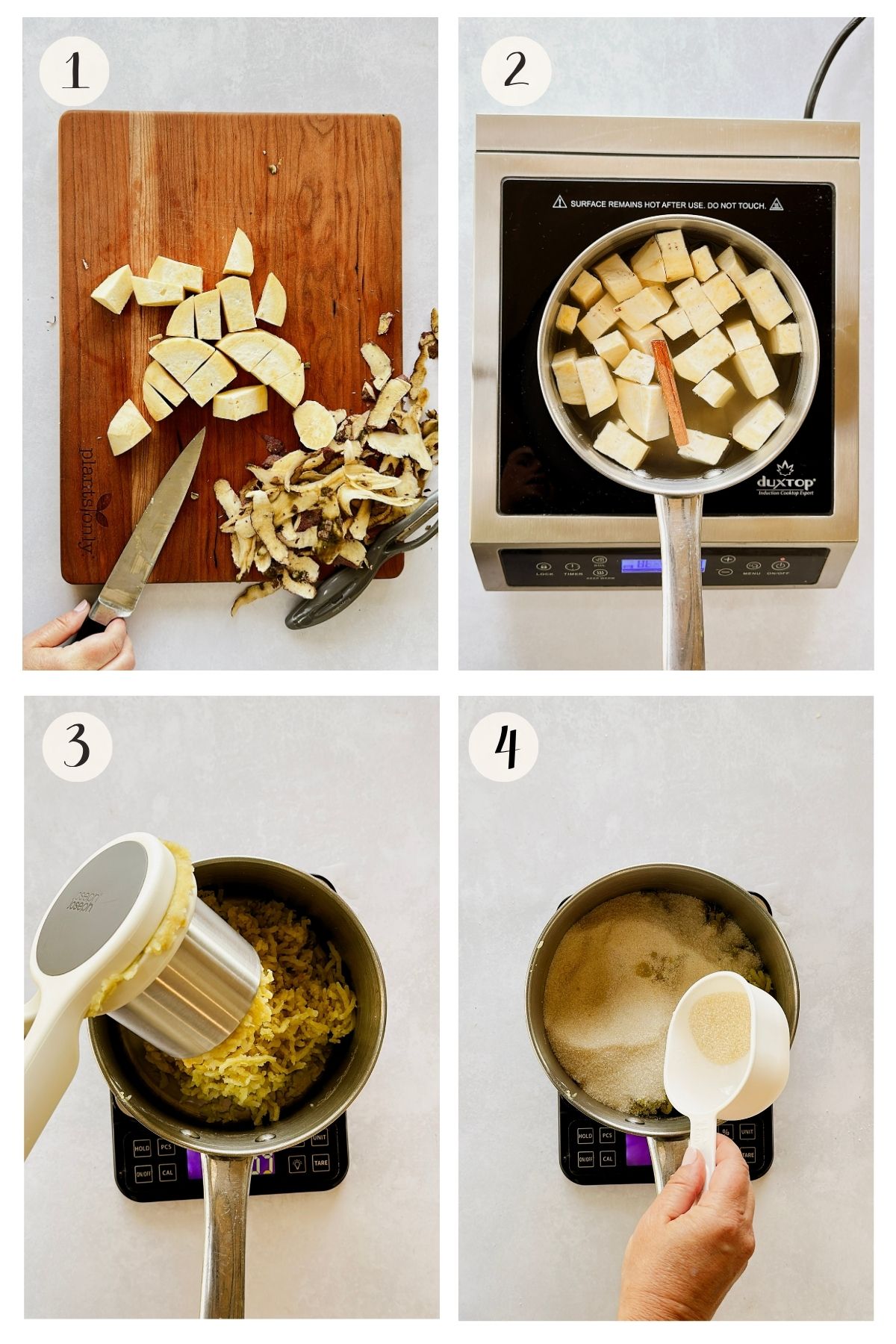
Step 1: Peel and cube the boniato - Drop the pieces into a pot of water as you go so they don't oxidize and turn gray
Step 2: Simmer with salt and cinnamon - Add a pinch of salt and a cinnamon stick. Boil, then simmer 15-20 minutes or until fork-tender.
Step 3: Drain and mash - Drain and remove the cinnamon stick. Pass through a ricer or sieve for the smoothest texture.
Step 4: Add sugar and lime zest - Measure the mash. You want equal parts boniato and sugar by weight, preferably. Stir both into a clean pot over medium-low heat and add the lime zest and cinnamon stick you used when you boiled the potatoes.
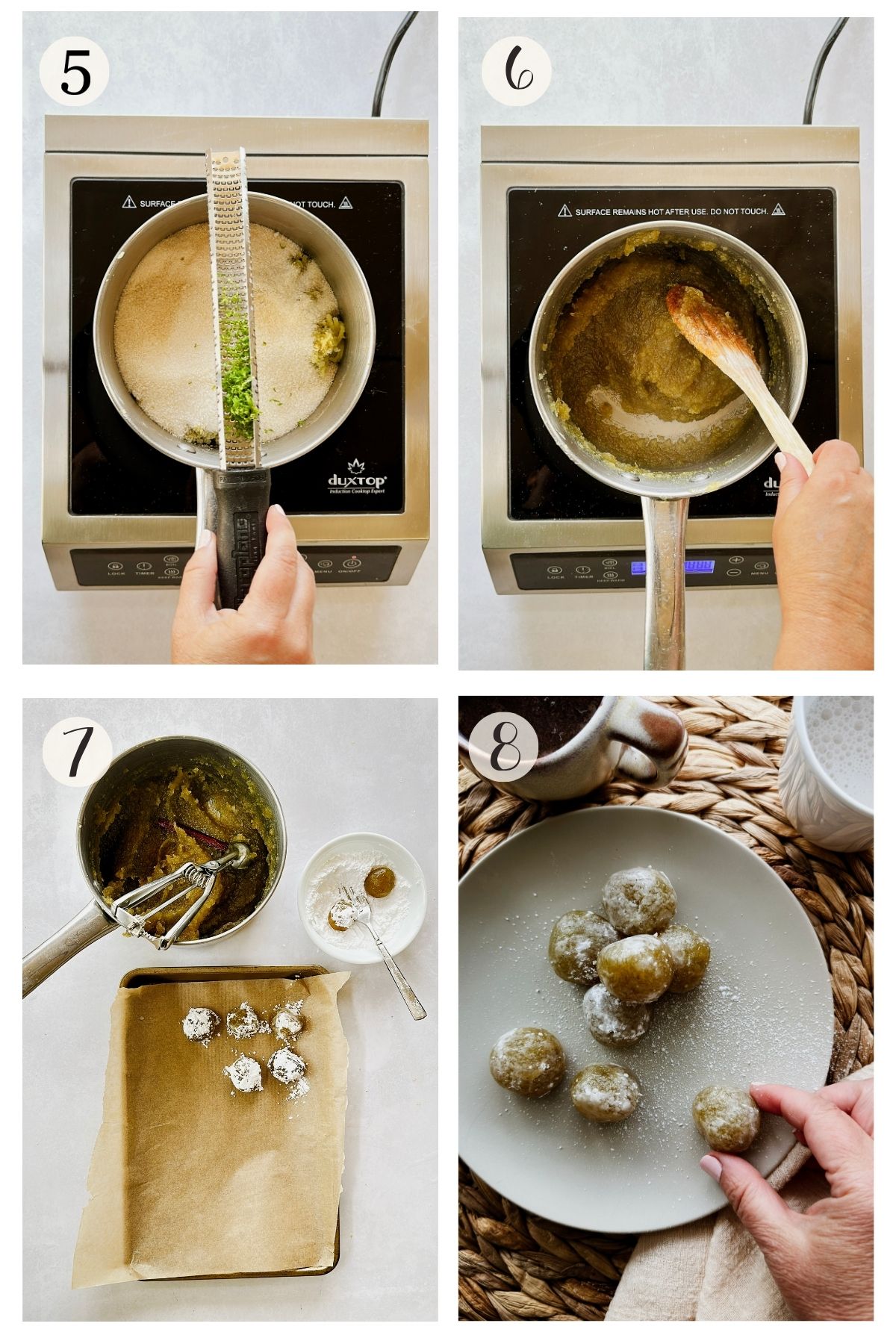
Step 5: Reduce until it pulls away - Cook 20-30 minutes, stirring often, until the paste holds its shape, pulls from the sides, and does not move. Lower the heat if it starts to scorch.
Step 6: Cool - Off the heat, cool about an hour, or 20-40 minutes in the fridge, until you can handle it.
Step 7: Roll into balls and coat - Scoop with a melon baller and roll smooth between damp palms. Roll in powdered sugar, tapping off the excess.
Step 8: Chill - Chill 1 hour or more for a fudgier bite. The finished boniatillo should be firm enough to hold its shape, with a dense, smooth, fudgy texture. It should feel slightly soft when you bite into it, but not sticky or wet.
Tips For Success
- I like to start with a little more than 1 pound of boniato to account for the peel and the ends I trim off. That way, once it's cooked and I weigh it, I have about 1 pound ready to use.
- Drop the boniato into water as you cut it - Boniato oxidizes, so the cut surfaces start going gray and blotchy within a few minutes of hitting air. Keep your pot of water next to your cutting board and drop the cubes in as you go.
- Weigh your ingredients - The whole recipe is a ratio, so weighing is critical. I use this scale that I love.
- Use a heavy pan - Thin pans scorch this paste in seconds, and once you have brown flecks, there's no fixing it. You'll have chunks of hard burnt sugar (I make mistakes, so you don't!). Enameled cast iron or a thick stainless saucepan is ideal.
- Don't crank the heat to hurry it - Higher heat gets you a burnt pan. Medium-low, patience, and stirring consistently is the whole technique.
- Wet your hands when rolling - this will help with reducing the sticking.
- Troubleshooting Tip: If your boniatillo doesn't firm up well after rolling, refrigerate the balls until they become firm. If they only stay firm while refrigerated and soften again at room temperature, it likely needed to cook a little longer. Be sure to let the mixture cook down and evaporate as much moisture as possible. The less moisture in the mixture, the firmer your boniatillo seco will be.
- If you want your boniatillo seco rounder after chilling, just give each piece a quick roll between your hands to smooth it out and reshape it. Then return them to the refrigerator to firm up again.
Serving Suggestions
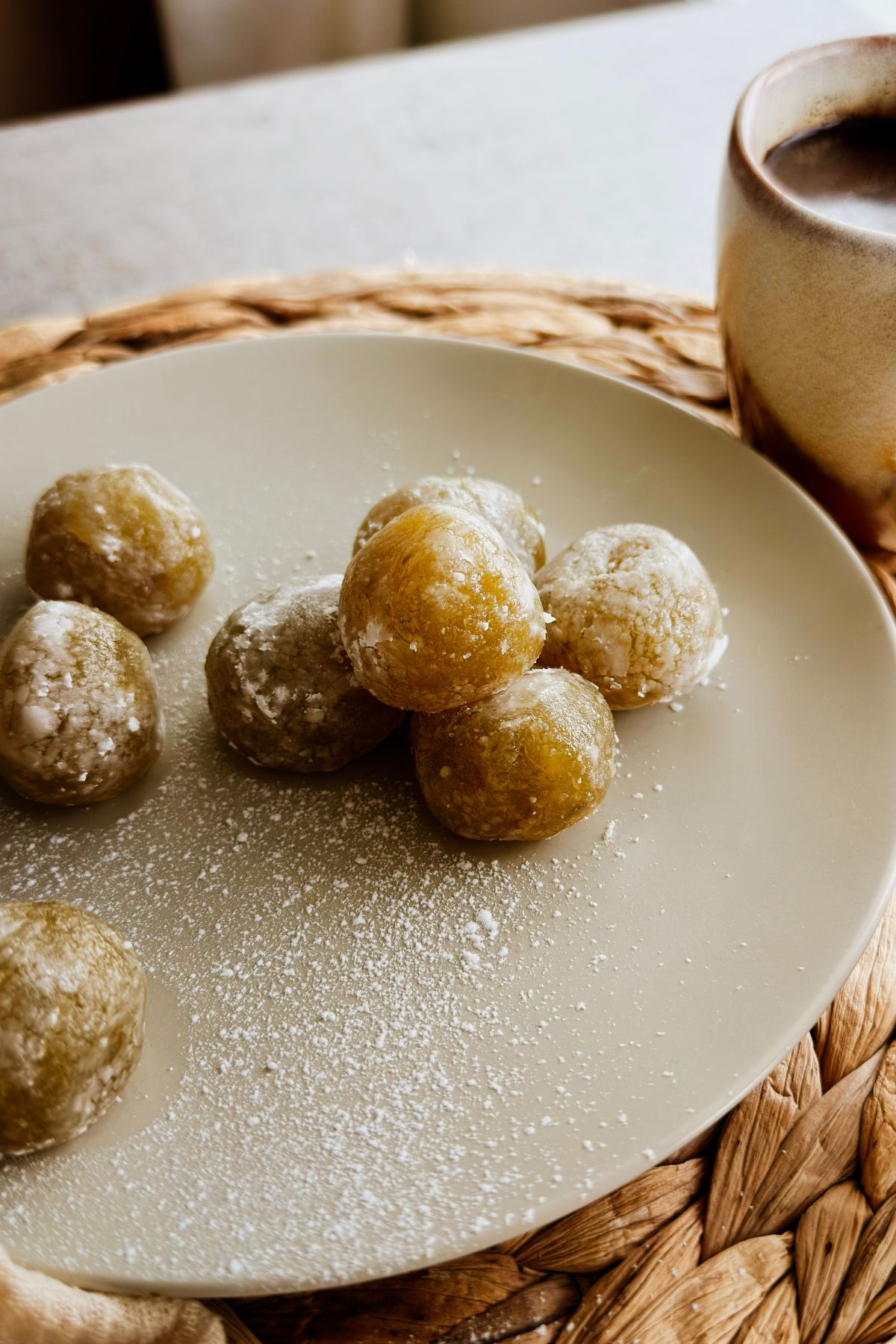
- With a cafecito. Boniatillo seco is sweet enough that it can pair with something bitter and strong next to it, and a tiny cup of Cuban coffee is exactly that.
- On a Cuban dessert tray. Set them out with Pastelitos de Guayaba and a bowl of Cuban Suspiros (Meringue Cookies). It's a good Noche Buena/Christmas Eve dessert.
- As a gift. Layer them in a tin with parchment between the rows. They travel well, they keep for weeks, and they're unusual enough that people ask what they are - which is half the fun of handing them over.
- Chilled or at room temperature. Cold, they're firm and fudgy with a clean bite. Room temperature, they're softer, and the cinnamon and citrus come forward more.
How to Store Boniatillo Seco
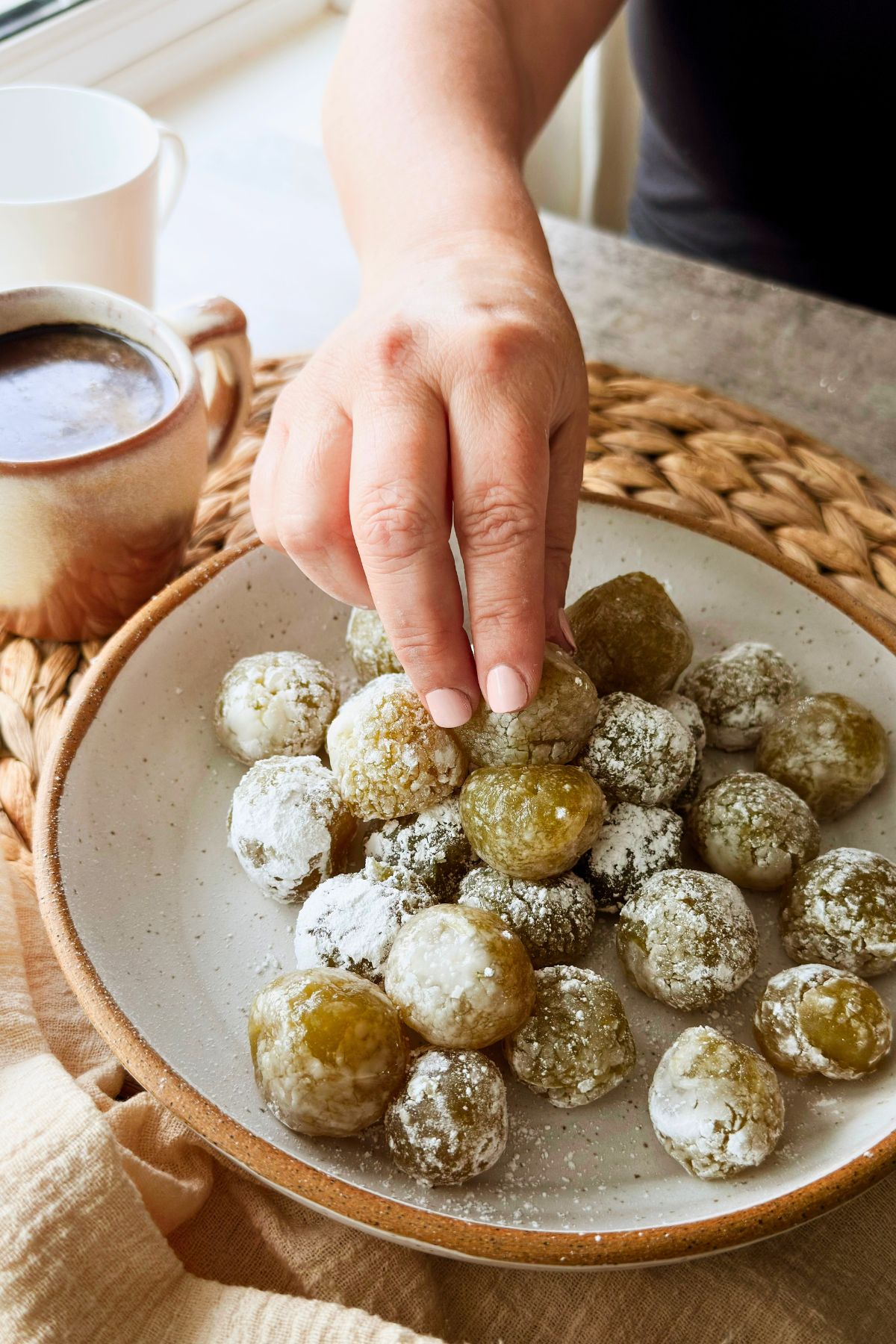
Store boniatillo seco in an airtight container in the refrigerator or at room temperature, placing parchment or wax paper between layers if needed. They go pretty quickly around here, so I usually just keep them on a plate in the fridge and let everyone grab one as they come and go. They'll keep for 2-3 weeks. Note - they will be firmer when refrigerated, which I prefer.
If frozen, wrap tightly, and they'll keep 6 months.
Boniatillo Seco FAQS
Cooking time, mostly. Soft boniatillo is a spoonable pudding. Boniatillo seco is cooked well past that point until it's firm enough to shape and eat with your fingers.
No, it won't be the same candy. Orange sweet potatoes hold a lot more water and a lot more of their own sugar, so the paste takes noticeably longer to cook down. It also ends up softer than a boniato batch. Boniato's dry, starchy flesh is what gives this candy its texture, and there's no way to fake it. If you can find boniato, it's worth the trip. If you can't, Japanese sweet potatoes (purple skin, white flesh) are the closest substitute and behave almost identically.
Watch for the moisture to cook out. Once it's gone, the paste stops flowing and starts holding whatever shape you give it. Push it into a mound in the middle of the pan, and if it stays a mound instead of settling back down, that's your signal that it's done.
Yes, and it's worth doing since the active stirring time barely changes. Use a wider pan so the surface area keeps up, and expect the cook-down to run 10 to 15 minutes longer.
Drop a comment and tell me how this boniatillo seco turned out! Was it love at first bite, surprisingly edible, or a full-on yuck? And if my directions helped (or didn't), please let me know so I can keep improving these recipes for you. Follow me on Pinterest, Instagram, Facebook, and YouTube for vegan inspiration.
Recipe Card
Boniatillo Seco (Cuban Sweet Potato Candy)

Equipment
- Scale optional
- Potato Ricer optional
Ingredients
- 1 pound boniato (white-fleshed sweet potato) 445 g, peeled and cubed (This is around the weight of one fat boniato)
- 1 cinnamon stick
- pinch of salt
- 2 cups granulated sugar 445 g - it should be the same weight or quantity as the cooked boniato
- zest of a lime lemon, or orange
- ½ cup powdered sugar optional, but recommended, to coat the candy

Instructions
- Boil the boniato: As you peel and cube the boniato, drop the pieces into the pot of water so they don't oxidize and turn gray. Add a pinch of salt and a cinnamon stick to the saucepan. Bring to a boil, then simmer for 15 to 20 minutes or until fork-tender.
- Drain and mash: Drain the boniato well and remove the cinnamon stick and set aside. Pass the boniato through a sieve or ricer for a smooth texture, or mash thoroughly with a fork or potato masher.
- Cook with sugar: Weigh or measure the mashed boniato. You want roughly equal parts boniato and sugar by weight. Return the mashed boniato to a clean pot over medium-low heat and stir in the granulated sugar and the zest of one lime. Add back the cinnamon stick you used when you boiled the potatoes.
- Reduce until firm: Cook 20-30 minutes, stirring often, until the moisture has cooked out and the mixture pulls away from the sides of the pot. It should hold its shape when mounded - this is what makes it 'seco' (dry) rather than creamy. As it gets close to drying out, keep a close eye on it to prevent it from scorching or burning. Adjust the temperature down if needed. For the firmest boniatillo, be sure to cook the mixture long enough to evaporate as much moisture as possible.
- Cool: Remove the pot from the heat and let the mixture cool for about an hour or until you can handle it with your hands. You can refrigerate for 20 - 40 minutes for quicker chilling.
- Roll the candy: Scoop the cooled paste with a melon baller or spoon. Roll each portion into a smooth ball between damp palms, then turn it through powdered sugar until coated. Re-wet your hands as needed and set the finished balls on a parchment-lined tray.
- Chill: Let the boniatillo seco chill in the refrigerator for at least 1 hour before serving to help it firm up. If it's still a little soft, keep it refrigerated longer. I like the firmer texture even more when I leave them overnight. If the balls look a little wonky after chilling, simply roll them again between your hands to smooth and reshape them. The finished boniatillo seco should be firm enough to hold its shape, with a dense, smooth, fudgy texture. It should feel slightly soft when you bite into it, but not sticky or wet.
Luke says
It was DELICIOUS, definitely something sweet to enjoy every now and again!!!
Regi Pearce says
Aww, thank you, Luke! I’m glad you liked it! Definitely a special treat to enjoy every now and then.
Regi Pearce says
I absolutely love making boniatillo seco! This is one of those traditional Cuban sweets that brings back so many memories. It takes a little patience to cook the mixture down, but once you get the moisture just right, you end up with the most deliciously dense, fudgy little bites. I hope you enjoy making them as much as I do!